

Knowing how to sleep after wisdom teeth removal comes down to 3 steps. Raise your head on multiple pillows, remove the gauze before bed, and skip straws and smoking. Bedfordshire Hospitals NHS Trust advises multiple pillows to reduce swelling. Swelling may increase on day 2 or 3 and resolves in about 7 to 10 days. MedlinePlus says the socket takes 1 to 2 weeks to heal.
Key Takeaways
- Keep your head raised on multiple pillows to reduce swelling, per Bedfordshire Hospitals NHS Trust.
- Gauze is a short pressure step of 15 to 30 minutes, not an overnight dressing.
- Cover your pillow with a towel, because light blood stains on bed linen are expected.
- Skip straws for at least 24 hours and smoking or vaping for at least 72 hours.
- Call your dentist for bleeding that does not stop, fever, pus, or pain that keeps getting worse.
How Should You Sleep After Wisdom Teeth Removal?
Sleep after wisdom teeth removal with your head raised on multiple pillows, according to Bedfordshire Hospitals NHS Trust. The Trust advises elevation to reduce swelling. Light oozing in the first 24 hours is also expected.
Written instructions from your dentist come first, and our extraction care page explains what a visit involves. Those instructions cover how to sleep after wisdom teeth removal, including position, medicine and timing.
Kent Community Health NHS Foundation Trust suggests covering your pillow with a towel at bedtime. The towel soaks up saliva and blood that may dribble in the night. Bedfordshire Hospitals NHS Trust also lists blood stains on bed linen as expected.
Gauze is the next bedtime question, because bleeding control decides when you can lie down.
Should You Sleep With Gauze After Wisdom Teeth Removal?
Do not plan to sleep with gauze after wisdom teeth removal, because NHS leaflets describe gauze as a short pressure step. Bedfordshire Hospitals NHS Trust names 15 minutes of firm pressure with damp gauze for heavy bleeding. Kent Community Health NHS Foundation Trust names 30 minutes of firm biting if the socket bleeds again.
MedlinePlus explains that gauze stops bleeding and helps a blood clot form. The clot then fills the socket while bone grows back in. Ask your surgeon whether bleeding has stopped before you lie down.
How to Put Gauze in After Wisdom Teeth Removal?
Put gauze in after wisdom teeth removal by dampening a clean pad and placing it over the socket. Then bite down firmly while sitting quietly. Kent Community Health NHS Foundation Trust describes rolling the damp cotton wool or gauze and placing it over the wound. MedlinePlus also names a damp piece of gauze.
When Can You Stop Using Gauze After Wisdom Teeth Removal?
You can stop using gauze after wisdom teeth removal once the bleeding stops. The NHS leaflets set pressure periods of 15 and 30 minutes. The NHS advises urgent help when bleeding does not stop. MedlinePlus lists excessive bleeding several hours after extraction as a reason to call your dentist.
What Is a Safe Bedtime Routine After Wisdom Teeth Removal?
A safe bedtime routine after wisdom teeth removal takes five steps that follow NHS and MedlinePlus guidance. The numbered list below puts them in order.
- Check that bleeding has stopped, and press on the socket with damp gauze if it has not.
- Hold a cold pack wrapped in a towel on your cheek for 10 to 20 minutes, as MedlinePlus advises.
- Stack multiple pillows so your head stays raised.
- Cover the pillow with a towel to catch saliva and blood.
- Take pain medicine exactly as your dentist directs.
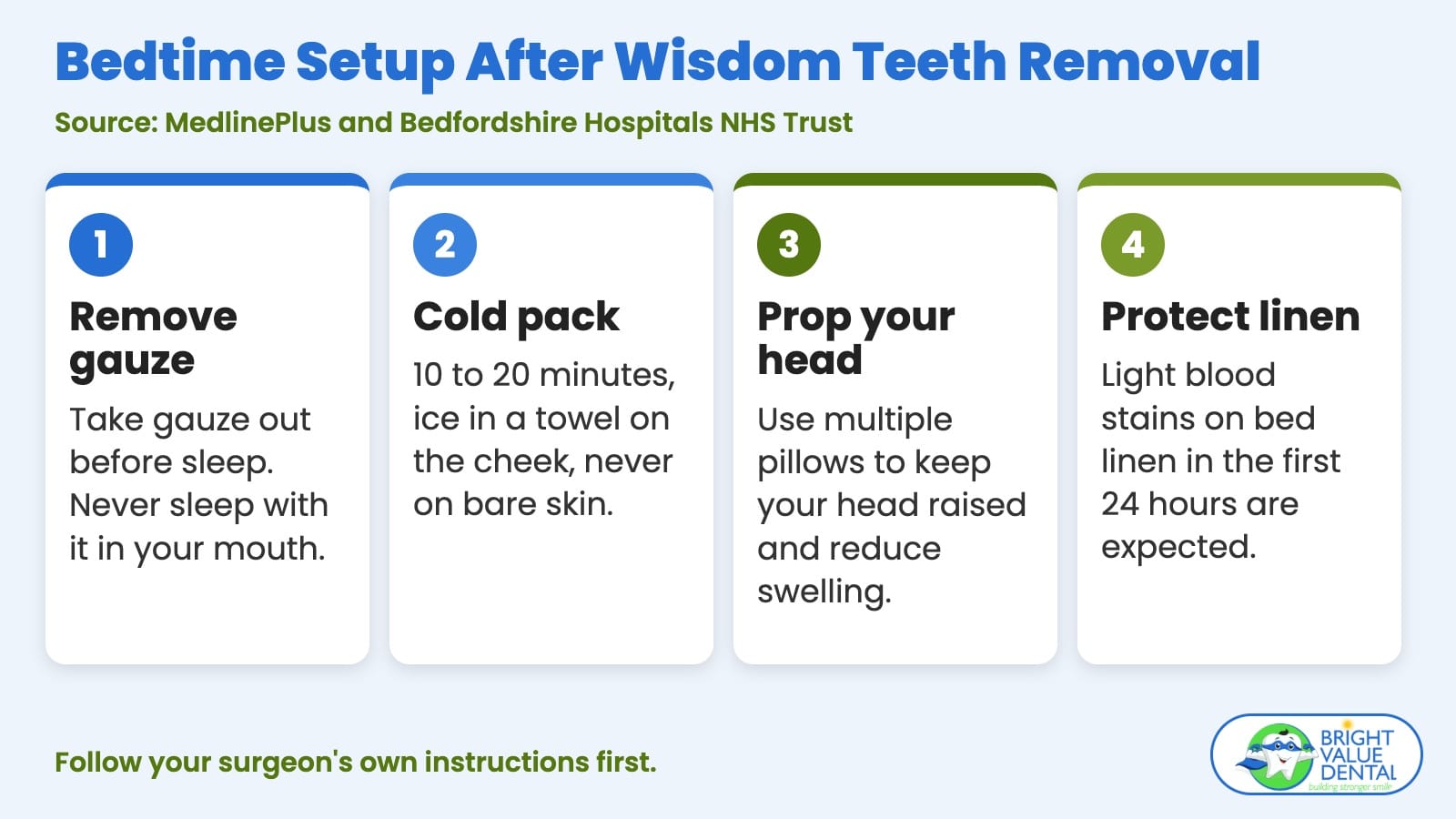
The graphic above shows the bedtime setup as four cards. Medicine timing needs its own rules.
The NHS states that adults should take ibuprofen with or after food and wait at least 4 hours between doses. Kent Community Health NHS Foundation Trust advises against aspirin after an extraction unless a doctor prescribes it. Cold packs and pillows then lead into the swelling timeline.
How to Reduce Swelling After Wisdom Teeth Removal?
Reduce swelling after wisdom teeth removal by applying a cold compress for 10 to 20 minutes at a time, according to MedlinePlus. Keep your head raised between packs. MedlinePlus says to wrap ice in a towel and never place it on bare skin. Bedfordshire Hospitals NHS Trust advises ice packs over the surgery site in the first 24 to 48 hours.
An evidence map of systematic reviews in PMC classed cryotherapy as probably beneficial for pain and swelling in the first 72 hours. The same map rated the quality of the reviews as mostly low. Cold packs therefore support, and do not replace, your surgeon’s plan.
The table below sets out the swelling and healing timeline from the NHS trust and MedlinePlus.