
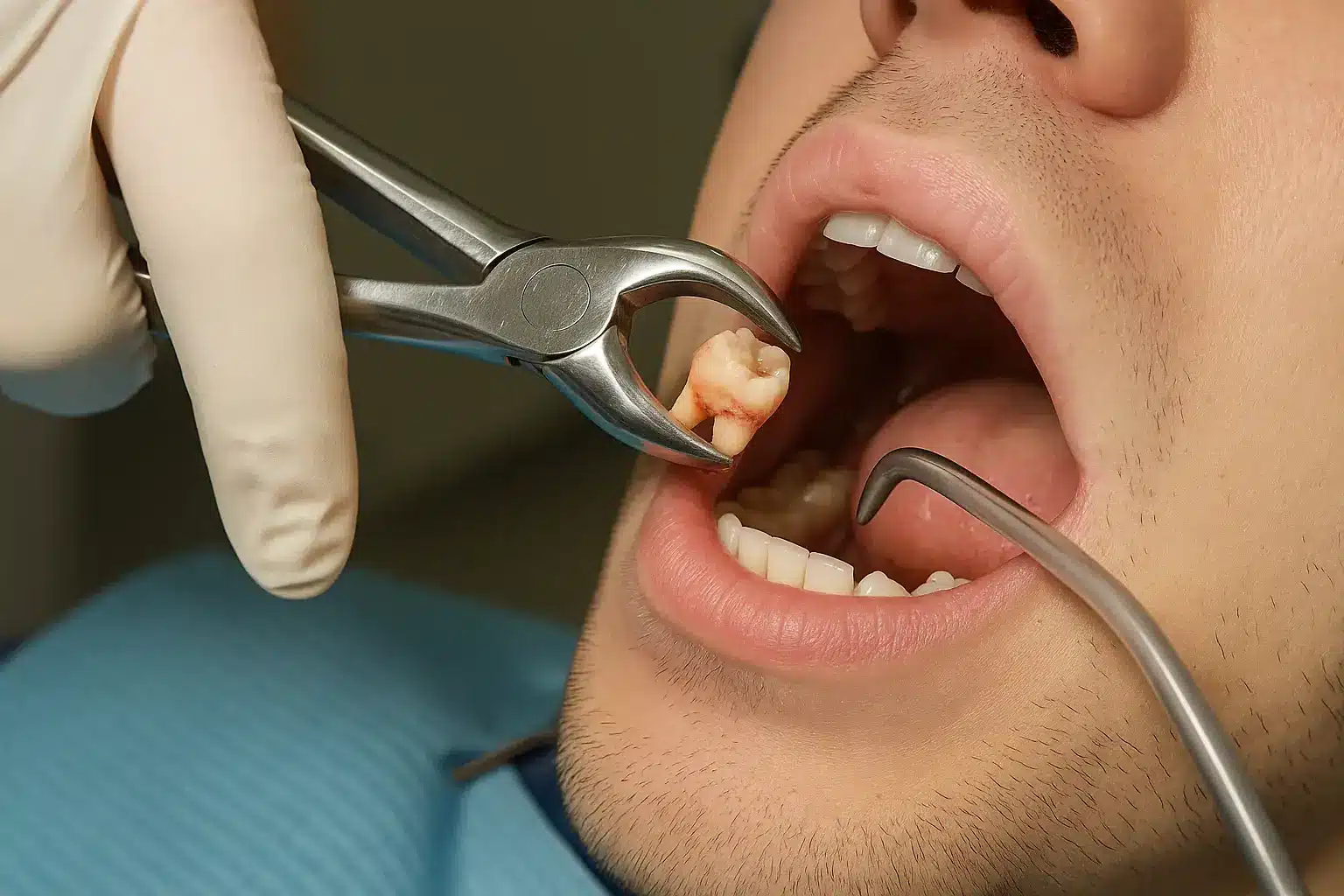
Full recovery from wisdom teeth removal takes about one to two weeks, though most people are back to their normal daily routine within three to five days. Swelling and soreness peak around 48 to 72 hours, ease noticeably by day four or five, and the gum tissue closes over each socket within roughly three to four weeks. Underneath that closed gum, bone keeps rebuilding for three to six months, which you will never feel happening. Below we cover how long the procedure itself takes, the recovery timeline day by day, how long the holes take to close, what helps healing move along and what slows it down, and the signs that deserve a phone call rather than a wait.
What Should You Expect After Wisdom Teeth Removal?
After wisdom teeth removal you should expect bleeding that slows within the first hour, swelling that builds for two to three days, jaw stiffness, and soreness that responds to cold packs and the pain relief your dentist recommends. Recovery follows a predictable arc, and knowing the shape of that arc is what keeps normal healing from feeling like something has gone wrong.
Wisdom teeth are third molars, the last teeth to arrive, usually between the late teens and mid twenties. They sit at the very back of the jaw where space is tight, which is why they so often come in at an angle or stay trapped under gum or bone. Removing them is one of the most common procedures in dentistry. An analysis published in the American Journal of Public Health estimated that about 10 million third molars are removed from roughly 5 million people in the United States each year.
Dr. Yu has performed thousands of extractions over the past 20 years, and most of them happen right here in our office under local anesthesia. A tooth extraction starts with a comprehensive exam and X-ray review, moves through comfort measures and the removal itself, and ends with gauze placement and the aftercare guidelines that carry you through the next week. That final step is the one you take home, and it does more for your recovery than anything else in the appointment. Aftercare belongs to the same preventive mindset that runs through all of our general dentistry work.
What Happens in the First 24 Hours?
In the first 24 hours a blood clot forms in each empty socket, bleeding slows, and swelling begins to build. Everything you do on day one should protect that clot, because a clot lost on the first day sets recovery back further than anything that happens later in the week.
Here is the sequence for the first day:
- Bite down on the gauze with steady, gentle pressure for 30 to 60 minutes so the clot can form. Replace it if it soaks through.
- Wait for the numbness to wear off completely before eating anything, so you do not bite your cheek, lip, or tongue without feeling it.
- Apply a cold pack to the outside of your cheek, 20 minutes on and 20 minutes off, for the rest of the day.
- Rest with your head propped above your heart. Lying flat lets blood pool in the head and increases both swelling and throbbing.
- Eat cool, soft foods once the numbness is gone and chew far away from the extraction sites.
- Skip rinsing, spitting, and straws entirely on day one. Gentle warm salt water rinses start the following day.
Some oozing and a pink tinge to your saliva is normal on the first day and even into the second. Steady bleeding that does not slow with 30 minutes of firm gauze pressure is different, and that one is worth a call.
How Long Does Wisdom Teeth Surgery Take?
Wisdom teeth surgery usually takes between 30 and 60 minutes per tooth, and a straightforward case can be finished in less. Lower wisdom teeth take measurably longer than upper ones, because the lower jaw is denser bone and the roots sit closer to the nerve running through it.
An observational study comparing surgical difficulty between the two jaws put the mean procedure duration for impacted lower third molars at 44.13 minutes, against 33.33 minutes for upper third molars, with all extractions performed by an experienced surgeon. The same study identified root curvature, the surgical technique required, and the type of impaction as significant predictors of how long any individual case runs.
Appointment length is longer than procedure length. Anesthesia needs time to take effect, and the gauze placement and post-operative instructions at the end take a few minutes more. Booking a couple of hours for the visit is realistic even when the removal itself is quick, and our post on what to expect