
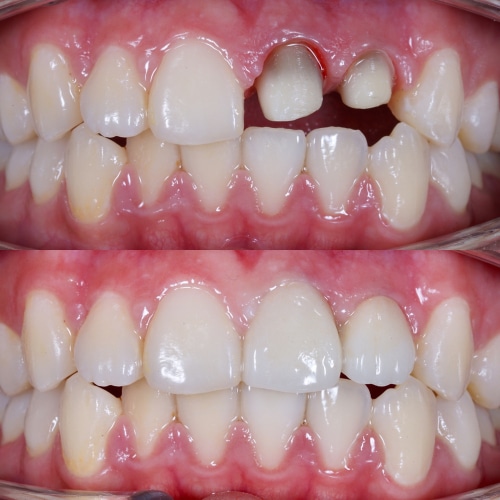
A standard dental crown procedure typically requires two visits over two to three weeks. During the first visit, your dentist examines the tooth, numbs the area with local anesthesia, removes any decay, shapes the tooth to fit the crown, takes impressions, and places a temporary crown. During the second visit, the temporary crown comes off, the permanent crown is checked for fit and color, and it is cemented permanently in place. The entire process is routine, well-established, and designed to restore a damaged tooth’s strength, shape, and function with minimal discomfort. This article walks through every step of the crown placement process so you know exactly what to expect.
What Is a Dental Crown Procedure?
A dental crown procedure is a two-appointment process in which your dentist prepares a damaged tooth, creates a custom-fitted cap, and bonds that cap permanently over the tooth to restore its full strength and appearance. The crown covers the entire visible portion of the tooth above the gum line, replacing lost structure and protecting what remains from further damage.
Dentists recommend dental crowns for teeth that are cracked, badly decayed, weakened after root canal treatment, or worn down from grinding. A crown also anchors a dental bridge, covers a dental implant, or corrects a severely discolored tooth. According to the National Dental Practice-Based Research Network, 94% of dentists surveyed recommended crowns for posterior teeth following root canal treatment, making it one of the most commonly performed restorative procedures in dentistry.
The procedure itself has been refined over decades. Modern materials and digital technology have made crown placement faster, more precise, and more comfortable than ever before. Understanding what happens at each stage removes the uncertainty and helps you feel prepared.
What Types of Dental Crowns Are Available?
The types of dental crowns available include porcelain (all-ceramic), porcelain-fused-to-metal (PFM), zirconia, gold and metal alloy, and resin. Each material offers a different balance of strength, appearance, and longevity. Porcelain crowns match natural tooth color most closely and work best for front teeth. Zirconia delivers a flexural strength of 900 to 1,200 megapascals (MPa), according to data published in the Journal of Dental Research, making it the strongest metal-free option available for back teeth. Gold crowns show a 96% survival rate at 10 years, per clinical data reviewed in the Journal of Prosthetic Dentistry, making them the most durable option overall. Your dentist recommends the material based on which tooth needs the crown, how much force that tooth absorbs, and your cosmetic preferences.
What Happens During the First Crown Appointment?
The first crown appointment is the longer of the two visits, typically lasting 60 to 90 minutes. This is where the tooth is evaluated, prepared, and fitted with a temporary crown. Every step in this appointment builds toward creating a precise foundation for the permanent restoration.
- Examination and X-rays: Your dentist examines the tooth visually and takes X-ray images of the tooth and surrounding bone. X-rays reveal the root structure, the extent of any decay, and whether the bone supporting the tooth is healthy. This information determines whether the tooth can support a crown or whether additional treatment, like root canal therapy, is needed first.
- Local anesthesia: The dentist applies local anesthesia to numb the tooth and the surrounding gum tissue completely. You will feel pressure during the procedure but not pain. The numbing typically lasts one to three hours after the injection, depending on the type and amount of anesthetic used.
- Tooth preparation and shaping: The dentist removes any decayed or damaged portions of the tooth, then reshapes the remaining structure into a tapered form that the crown will fit over. This reshaping removes approximately 1 to 2 millimeters of enamel around the entire circumference and from the top of the tooth. The goal is to create a smooth, even foundation that allows the crown to seat securely without altering your bite. If the tooth has lost too much structure from decay or fracture, the dentist builds it up with a composite filling material before shaping, creating a stronger core for the crown to grip.
- Impressions: The dentist takes a precise mold of the prepared tooth and the teeth around it. Traditional impressions use a putty-like material that captures the exact dimensions of the tooth in a physical mold. Many offices now use digital intraoral scanners that create a three-dimensional digital image of the tooth instead. A study published in Cureus (2024) found that CAD/CAM-fabricated zirconia crowns produced a marginal fit of 0.0172 millimeters, significantly tighter than PFM crowns at 0.0375 millimeters, demonstrating the precision digital impression technology achieves. The impressions or digital scans are sent to a dental laboratory where a technician fabricates the permanent crown.
- Temporary crown placement: A temporary crown made of resin or acrylic is placed over the prepared tooth and attached with temporary cement. The temporary crown protects the exposed tooth from sensitivity, bacteria, and shifting while the permanent crown is being fabricated at the lab. Temporary cement is intentionally weaker than permanent cement so the temporary crown can be removed easily at the next visit.
By the end of this appointment, the prepared tooth is protected and the dental lab has everything it needs to build the permanent crown. The lab process typically takes two to three weeks.
How Should You Prepare for a Dental Crown Procedure?
You should prepare for a dental crown procedure by scheduling enough time for the appointment, arranging transportation if you prefer not to drive while numb, and eating a meal beforehand since the anesthesia will make eating difficult for a few hours after. Let your dentist know about any medications you take, any allergies you have, and any history of reactions to local anesthesia. If you feel anxious about dental work, mention that too. We work with patients at every comfort level and can adjust the approach to keep you at ease throughout the process. Keeping up with preventive care like regular cleanings before the procedure also gives the dentist a clearer picture of your oral health going in.
What Happens Between the Two Appointments?
Between the two crown appointments, the dental laboratory fabricates the permanent crown using the impressions or digital scans from the first visit. A lab technician pours the physical impression into a plaster model or loads the digital scan into design software to map the exact shape of the crown. The technician selects the material your dentist specified, matches the shade to your surrounding teeth, and sculpts the crown to fit your bite precisely. The finished crown is inspected for accuracy, then shipped back to the dental office. This fabrication process takes two to three weeks in most cases.
During this waiting period, the temporary crown handles daily chewing and protects the prepared tooth. The temporary crown is not as strong or as precisely fitted as the permanent one, so taking extra care during this window matters.
How to Care for a Temporary Crown
Caring for a temporary crown requires gentler habits than you use with your natural teeth. Temporary cement holds the crown in place firmly enough for normal function but not strongly enough to withstand aggressive chewing or sticky foods. Avoid chewing gum, caramel, taffy, or any sticky candy that could pull the temporary crown off the tooth. Avoid chewing ice, hard nuts, or raw carrots on the side of the mouth where the temporary crown sits.
Brush the area gently with a soft-bristled toothbrush. When flossing around the temporary crown, slide the floss out from the side of the tooth rather than snapping it upward, which can catch the edge of the crown and dislodge it. If the temporary crown does come off, save it and call your dentist right away. The prepared tooth underneath is exposed and vulnerable without its protective cover. Your dentist can recement the temporary crown the same day in most cases. If the tooth is causing significant pain with the temporary crown missing, seek emergency dental care to prevent complications.
What Happens During the Second Crown Appointment?
The second crown appointment is shorter than the first, typically lasting 30 to 45 minutes. This is when the permanent crown is placed and the restoration is completed.
Your dentist numbs the area with local anesthesia, then carefully removes the temporary crown. The prepared tooth is cleaned of any residual temporary cement. The permanent crown is placed over the tooth and checked for fit, color, shape, and bite alignment. Your dentist will have you bite down on articulating paper, a thin colored strip that marks where the crown contacts the opposing teeth. If any high spots show up, the dentist adjusts the crown with a dental handpiece until the bite feels natural and even.
Once everything aligns correctly, the dentist bonds the permanent crown to the tooth using strong dental cement. Resin-based cements provide the most durable bond, especially for ceramic and crown placement involving porcelain or zirconia materials. The cement fills microscopic gaps between the inner surface of the crown and the prepared tooth, creating a tight seal that blocks bacteria and holds the crown firmly for years. After cementation, the dentist performs a final bite check and polishes the margins. The procedure is complete, and you can resume normal activities immediately.
How Painful Is Getting a Crown Put On?
Getting a crown put on is not painful because the procedure is performed under local anesthesia that numbs the tooth and surrounding tissue completely. During the first appointment, you may feel vibration from the dental handpiece as the tooth is shaped, and pressure as the impressions are taken, but you should not feel sharp pain at any point. If you do feel discomfort during the procedure, tell your dentist immediately. Additional anesthesia can be administered to keep you comfortable.
During the second appointment, the cementation process involves minimal sensation. The dentist removes the temporary crown, places the permanent one, and bonds it. This step is typically less involved than the preparation visit and produces little to no discomfort even without anesthesia, though most dentists numb the area as a precaution.
After the anesthesia wears off, some patients experience mild sensitivity to hot and cold temperatures around the crowned tooth. This sensitivity is normal and typically resolves within one to two weeks as the tooth adjusts to the new restoration. Over-the-counter pain relievers like acetaminophen or ibuprofen manage any post-procedure soreness effectively. If sensitivity persists beyond two weeks or if you experience sharp pain when biting down, contact your dentist. Persistent bite pain may indicate the crown needs a minor adjustment to sit more evenly against the opposing teeth.
How Long Will a Dental Crown Take?
A dental crown takes two appointments spread over two to three weeks from start to finish. The first appointment lasts 60 to 90 minutes. The second appointment lasts 30 to 45 minutes. The time between appointments is determined by how long the dental lab needs to fabricate the permanent crown, which is typically two to three weeks.
Some dental offices offer same-day crowns using CAD/CAM (computer-aided design and computer-aided manufacturing) technology. With this approach, the dentist takes a digital scan of the prepared tooth, designs the crown using specialized software, and mills it from a solid block of ceramic right in the office while you wait. The entire same-day process takes approximately two to four hours in a single visit, eliminating the need for a temporary crown and a second appointment. Not every tooth is a candidate for a same-day crown, and not every dental office has the equipment. Ask your dentist whether this option is available for your situation.
How Long Does a Dental Crown Last?
A dental crown lasts 10 to 15 years on average, and many crowns last significantly longer with proper care. A literature review published in the Journal of Prosthetic Dentistry by Pjetursson (2007) estimated a survival rate of 95% at five years and 90% at 10 years across all crown types. Gold crowns show the highest durability with a 96% survival rate at 10 years. Zirconia crowns follow at 92% survival at 10 years, according to recent systematic reviews. Porcelain and PFM crowns typically fall in the 10-to-15-year range.
| Crown Material | Average Lifespan | Strength | Best Use | Appearance |
|---|---|---|---|---|
| Porcelain (Lithium Disilicate) | 10-15 years | 400-500 MPa | Front teeth | Most natural |
| Porcelain-Fused-to-Metal | 10-15 years | Metal core + porcelain | Front and back teeth | Natural with possible dark line |
| Zirconia | 15-20+ years | 900-1,200 MPa | Back teeth, grinders | Good, improving with technology |
| Gold / Metal Alloy | 20+ years | Very high | Molars | Metallic (not tooth-colored) |
| Resin | 3-5 years | Low | Temporary use only | Acceptable short-term |
The factors that shorten a crown’s lifespan include teeth grinding (bruxism), chewing hard objects like ice or hard candy, poor oral hygiene that allows decay to form at the crown margin, and gum recession that exposes the edge of the crown. According to the Sleep Foundation, 8% to 31% of adults experience bruxism, and sleep bruxism generates up to 250 pounds of clenching force per the Merck Manual. A custom night guard protects crowns from teeth grinding forces during sleep and can extend the life of both crowns and natural teeth substantially.
Is There a Downside to Getting a Crown?
The main downside to getting a crown is that the procedure requires permanent removal of a thin layer of natural enamel, typically 1 to 2 millimeters, to make room for the crown. Enamel does not grow back, so the tooth will always need a crown or similar restoration going forward. This is an irreversible step, and it is one reason dentists recommend crowns only when the tooth genuinely needs one, not as a precaution for a tooth that could be treated with a smaller restoration like a filling.
Other considerations include temporary sensitivity after placement, which usually resolves within one to two weeks. In rare cases, patients may experience an allergic reaction to the metals used in PFM or metal alloy crowns, though this is uncommon with modern biocompatible materials like zirconia. Porcelain crowns can chip under extreme force, and any crown can eventually loosen if the cement breaks down over time. Regular dental checkups catch these issues early, before they compromise the tooth underneath.
Despite these considerations, the benefits of a crown far outweigh the downsides for a tooth that needs one. A crown prevents cracks from spreading, stops decay from reaching the nerve, restores chewing function, and extends the life of a tooth that would otherwise deteriorate. Research from the Canadian Agency for Drugs and Technologies in Health (CADTH) found that root-canal-treated teeth restored with crowns had a 94% survival rate at five years, compared to just 63% for teeth restored with fillings alone. The crown’s protective value is well-documented.
Is a Root Canal Always Needed With a Crown?
No, a root canal is not always needed with a crown. A crown and a root canal serve different purposes and address different problems. A root canal treats infection or damage inside the tooth’s pulp chamber. A crown protects and strengthens the tooth’s outer structure. Many crowns are placed on teeth that have never needed a root canal, such as teeth with large cavities, cracks, or excessive wear.
A root canal becomes necessary before a crown only when the pulp inside the tooth is infected, inflamed beyond recovery (irreversible pulpitis), or dead (necrotic). Your dentist determines pulp health through symptoms, X-rays, and pulp vitality tests before deciding the treatment plan. If the pulp is healthy and the tooth simply needs structural reinforcement, the crown alone is sufficient. If the pulp is compromised, root canal treatment clears the infection first, and the crown is placed afterward to protect the now-hollowed tooth. The two procedures work together when needed but operate independently when they do not. Understanding this distinction helps patients avoid unnecessary concern when a crown is recommended for a tooth with a healthy nerve. Cosmetic dentistry crowns placed for appearance improvement, for example, almost never involve root canal treatment.
What Are Alternatives to a Dental Crown?
The main alternatives to a dental crown are dental fillings, inlays and onlays, and veneers. Each option works for different levels of damage, and none of them replace a crown when full-coverage protection is what the tooth needs.
- Fillings work for small to moderate cavities where enough healthy tooth structure remains around the restoration. They sit inside the tooth and rely on the surrounding walls for support. Fillings are not strong enough for teeth with large areas of damage or for teeth that have lost structural walls.
- Inlays and onlays fill the gap between fillings and crowns. An inlay fits inside the cusps of a tooth. An onlay extends over one or more cusps. Both are custom-made in a lab and bonded to the tooth. They work well for moderate damage that exceeds what a filling can handle but does not require full-coverage protection.
- Veneers are thin porcelain shells bonded to the front surface of a tooth. They address cosmetic concerns like chips, stains, and minor misalignment. Dental bonding is another option for small chips that does not require a lab-fabricated restoration. Veneers cover only the front face of the tooth and do not provide structural reinforcement. A tooth that needs strength restoration needs a crown, not a veneer. Teeth whitening is another cosmetic option for discoloration that does not involve any structural modification at all.
- Extraction and replacement become necessary when the tooth is too damaged to save. A tooth extraction followed by a dental implant or bridge replaces the tooth entirely. This path is more involved and more costly than a crown, which is why preserving the natural tooth with a crown is almost always preferable when the tooth still has enough structure to support one.
Your dentist evaluates the specific condition of the tooth, the extent of damage, and the forces that tooth handles before recommending the best option. The goal is always to choose the least invasive treatment that provides adequate protection for the long term.
Frequently Asked Questions
Can a Tooth Still Rot Under a Crown?
Yes, a tooth can still rot under a crown. The crown material itself does not decay, but the natural tooth underneath remains vulnerable to bacteria at the margin where the crown edge meets the tooth surface near the gum line. Poor oral hygiene, gum recession, and aging cement can create gaps that allow bacteria to enter. Brushing twice daily, flossing around the crown, and keeping up with regular checkups are the best ways to prevent decay under a crown.
What Hurts More, Getting a Root Canal or a Crown?
Neither a root canal nor a crown should hurt during the procedure because both are performed under local anesthesia. Post-procedure discomfort is typically mild for both. Root canal recovery may involve slightly more sensitivity because the procedure addresses infected tissue inside the tooth. Crown preparation involves reshaping the outer surface, which produces mild soreness that usually fades within a few days. Most patients report that both procedures are far more comfortable than they expected.
Can I Just Get a Filling Instead of a Crown After a Root Canal?
You can get a filling instead of a crown after a root canal in some limited cases, particularly for front teeth that absorb less biting force. However, for back teeth like molars and premolars, a crown is strongly recommended. Research reviewed by CADTH found that root-canal-treated teeth with crowns had a 94% survival rate at five years, while those with fillings alone dropped to 63%. The tooth is significantly weaker after a root canal, and a crown provides the structural reinforcement that a filling cannot.
What Teeth Cannot Be Crowned?
Teeth that cannot be crowned are those with insufficient healthy structure above the gum line to support the restoration, teeth with vertical root fractures, and teeth with advanced gum disease and severe bone loss around the root. In these cases, the tooth may need extraction instead. Your dentist evaluates the tooth through X-rays and a clinical exam to determine whether enough foundation exists for a crown to succeed.
Does a Dental Crown Feel Like a Normal Tooth?
Yes, a dental crown feels like a normal tooth once you adjust to it. The permanent crown is custom-shaped to match your bite, so chewing, biting, and speaking should feel natural. Most patients report that the crown feels slightly different for the first few days as the tongue and cheeks adapt to the new contour. Within one to two weeks, the crowned tooth blends into the rest of your bite and you stop noticing it. If the crown continues to feel high or uncomfortable after two weeks, contact your dentist for a bite adjustment.
How Soon Can You Eat After Getting a Permanent Crown?
You can eat after getting a permanent crown as soon as the numbness from the anesthesia wears off, which typically takes one to three hours. Start with soft foods for the first 24 hours to allow the cement to reach full strength. After the first day, you can return to your normal diet. Avoid extremely hard or sticky foods long-term to protect the crown from chipping or loosening.
How Long Does It Take for a Crown to Feel Normal?
A dental crown typically feels normal within one to two weeks after placement. During the first few days, you may notice mild sensitivity to temperature changes and a slightly different sensation when your tongue touches the crown. These feelings fade as the tooth adjusts and the surrounding soft tissue settles. If discomfort persists beyond two weeks, your dentist can check the bite and make adjustments.
What It All Comes Down To
A dental crown procedure is a well-established, two-visit process that restores a damaged tooth’s strength, function, and appearance. The first visit prepares the tooth and captures the measurements the lab needs to build a precise, custom-fitted crown. The second visit bonds that crown permanently in place. The entire process is performed under local anesthesia, involves minimal recovery time, and produces a restoration that lasts 10 to 15 years or longer with proper care. Knowing what to expect at each step removes the uncertainty and lets you walk into each appointment feeling confident.
If you have a tooth that is cracked, decayed, worn, or weakened after a root canal, a dental crown may be the best way to protect it. At Bright Value Dental, we walk every patient through the process step by step so there are no surprises. Call us at (713) 668-1600 to schedule an appointment in our Southwest Houston office.