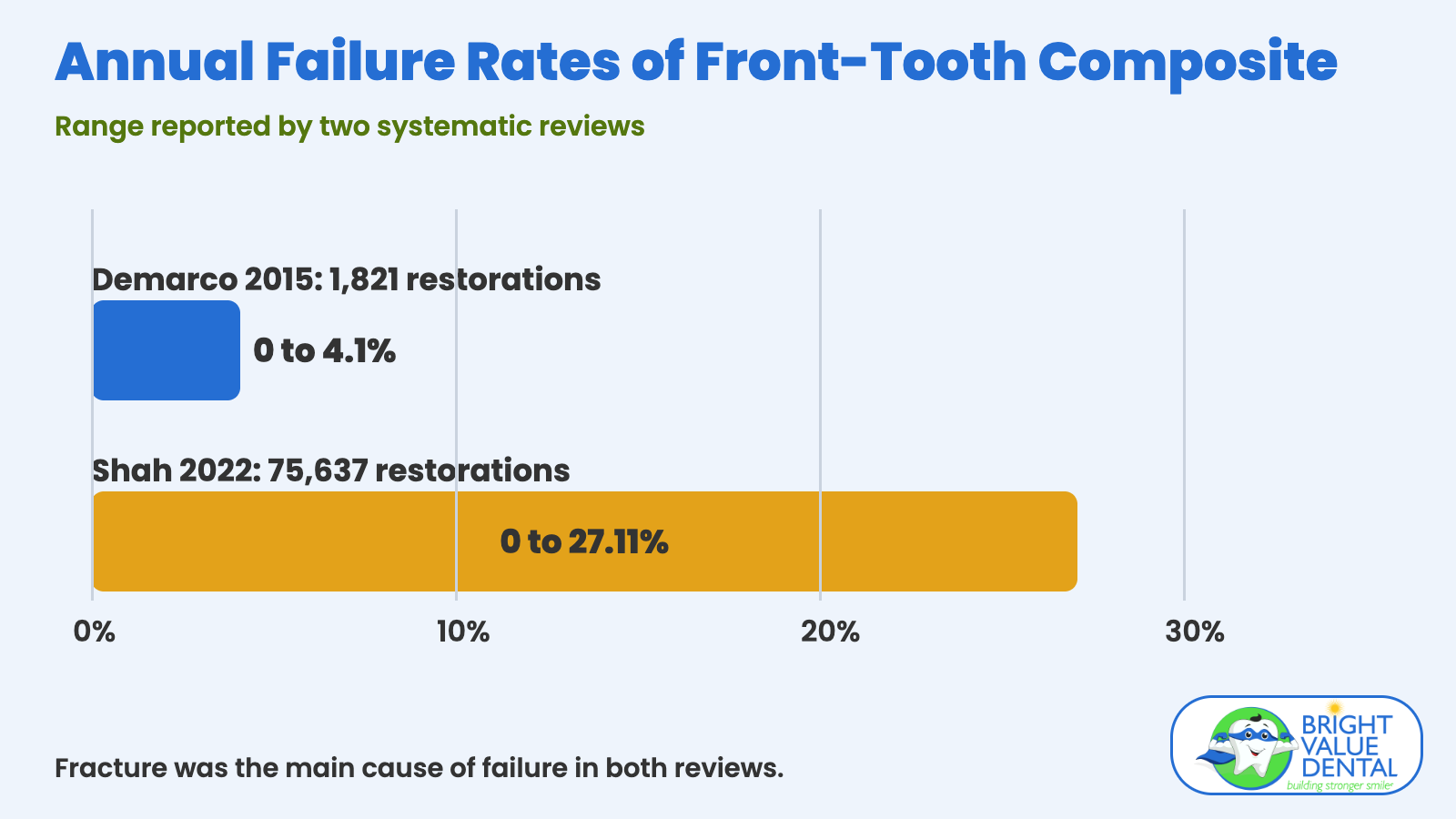
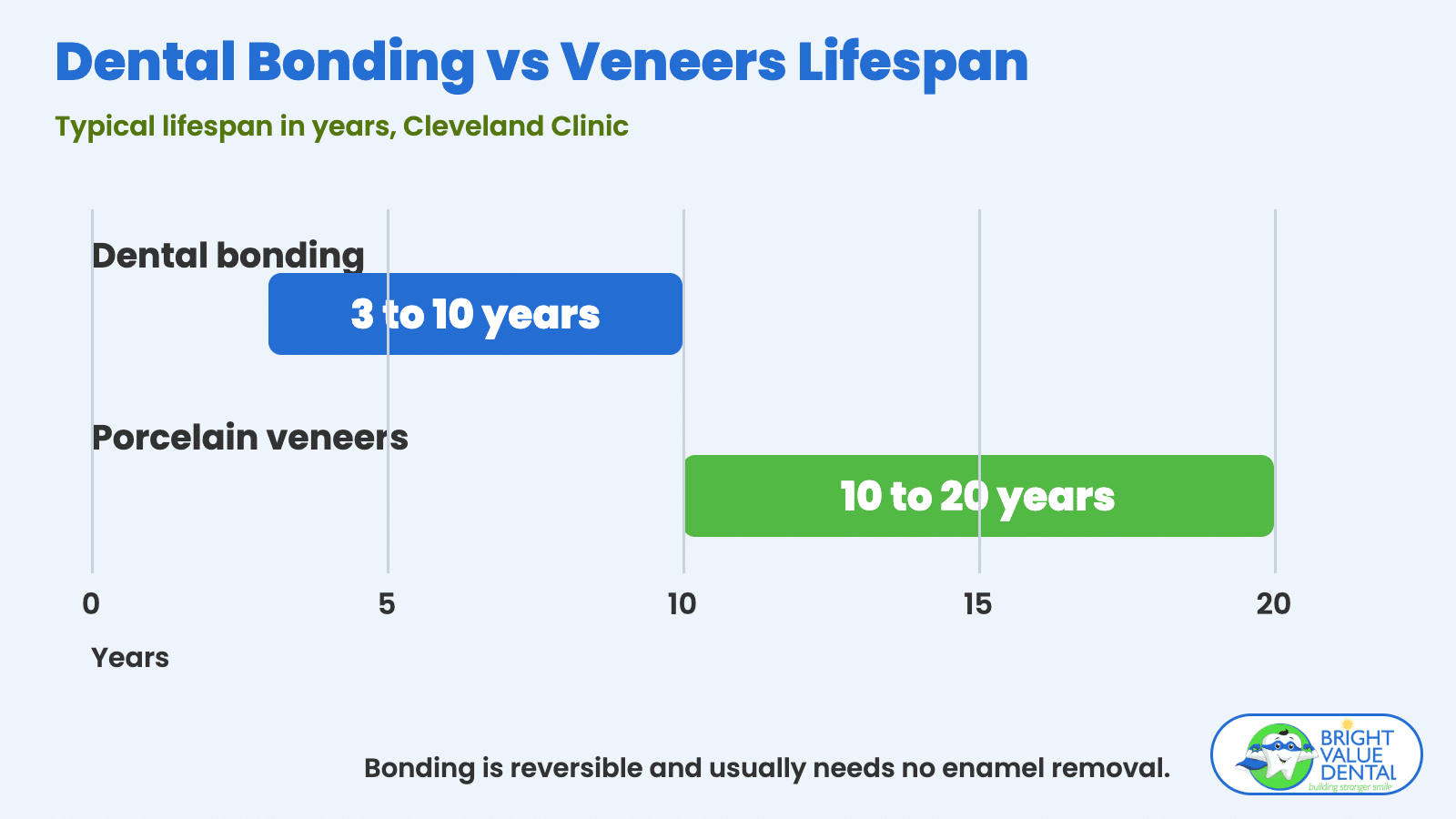
The answer to how long does dental bonding last is 3 to 10 years, per the Cleveland Clinic. Then it needs a touch-up or replacement. Habits and the number of treated teeth change that range. A review of front-tooth composite restorations found annual failure rates from 0 to 4.1%. Chipping is the most common failure, so careful habits and regular checkups protect the result.
Key Takeaways
- The Cleveland Clinic states bonding typically lasts 3 to 10 years, while veneers last 10 to 20 years.
- Dental bonding cannot last forever, because the resin chips, wears and stains over time.
- Fracture was the most common reason front-tooth composite restorations failed in a 2015 review.
- Avoiding ice, pens and fingernail biting protects bonding from chips.
- Whitening does not change bonding color, so whiten natural teeth first and match the resin afterward.
How Long Does Dental Bonding Last?
Dental bonding lasts 3 to 10 years before it needs to be touched up or replaced, according to the Cleveland Clinic. Lifespan depends on oral habits and on how many teeth were treated. The same source says the procedure takes about 30 to 60 minutes per tooth.
The range is wide because every mouth places different forces on the resin. A dentist checks the edges, shade and bite at each visit, and our dental bonding page explains how the material is placed. The table below shows what clinical evidence says about the same question.
The two reviews cover tooth-colored composite fillings and repairs, which use the same resin family as bonding. The graphic below compares the Cleveland Clinic lifespans for bonding and veneers.
How Long Does Bonding Last on Front Teeth?
A review of front-tooth composite restorations found annual failure rates from 0 to 4.1%. That figure answers how long does bonding last on front teeth. Demarco and colleagues tracked restorations for at least 3 years. Survival ranged from 53.4% to 100%, and the total failure rate was 24.1%.
That review also found Class III restorations, which repair the sides of front teeth, failed less than other types. Front teeth meet lighter biting loads than molars, yet fracture still led the failure list. Fracture is the same risk that shapes the answer about forever. The chart below plots the failure ranges from both reviews.