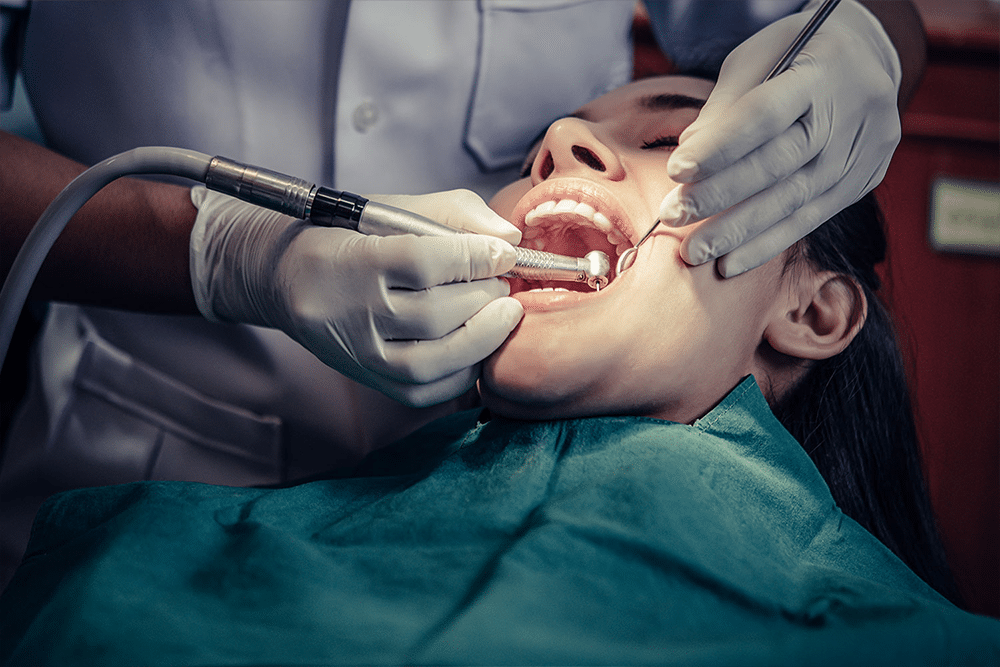
No, not everyone has wisdom teeth. Roughly a quarter of people are missing at least one, and a small share never develop any at all. Wisdom teeth are third molars, the last teeth to form, and they normally appear between ages 17 and 25. You can have four, three, two, one, none, or occasionally extra. Missing them is completely normal rather than a defect, and having them does not automatically mean they need to come out. Below we cover how many people are missing them and why, the tooth-count arithmetic behind all those questions, when they arrive, how to find out whether you have any, what problems they cause, and the honest answer to whether everyone really needs theirs removed.
Does Everyone Have Wisdom Teeth?
Not everyone has wisdom teeth. An updated systematic review and meta-analysis published in 2026 put the pooled global prevalence of third molar agenesis at 23.07%, meaning roughly one person in four is missing at least one wisdom tooth.
Agenesis is the clinical term for a tooth that never forms at all, as opposed to one that formed but never erupted. The distinction matters, because a wisdom tooth can be fully present and completely invisible if it stayed trapped under the gum or the bone. Plenty of people who assume they were born without wisdom teeth actually have all four sitting sideways under the jaw.
Third molars are missing far more often than any other tooth. Excluding wisdom teeth, congenital absence of a permanent tooth affects only about 5% to 6% of people. Third molars run four to five times higher than that, which is why researchers generally treat their absence as a normal variation in human anatomy rather than a developmental problem.
Is It Rare to Have No Wisdom Teeth at All?
Having no wisdom teeth at all is uncommon but not rare. An analysis of 6,082 adult panoramic radiographs found all four wisdom teeth congenitally absent in 3.4% of people, while at least one was missing in 22.6% of cases.
Those two numbers describe different situations. Missing one or two is ordinary and happens to roughly one person in four or five. Missing the complete set happens to about one person in thirty. Neither carries any health consequence on its own, and people with no third molars simply have a full functional set of 28 teeth instead of 32.
Why Don’t I Have Wisdom Teeth?
You do not have wisdom teeth because the tooth buds for them never formed, which is determined by genetics before you were born. Human jaws have grown smaller over evolutionary time while the number of teeth stayed the same, and third molars are the ones most often dropped from the set.
Jaw size is the accepted explanation. Earlier humans ate a coarser diet that demanded heavier chewing and larger jaws with room for all 32 teeth. Modern jaws are smaller, and research has found that people missing one or more third molars tend to have measurably smaller jaws and facial dimensions overall, with the effect increasing as more third molars are absent. Fewer teeth developing in a smaller jaw is a coherent pattern rather than a coincidence.
Is Missing Wisdom Teeth Genetic?
Yes, missing wisdom teeth is genetic and runs strongly in families. Rates also vary considerably between populations, with published figures ranging from roughly 10% in some groups to nearly 40% in others.
Sex and jaw position both shift the odds slightly. The 2026 meta-analysis found agenesis somewhat more common in women than in men, and found that a missing upper wisdom tooth is about 1.56 times more likely than a missing lower one. If your parents or siblings are missing third molars, your own odds are higher than average, though the trait does not pass down predictably enough to substitute for an X-ray.
How Many Wisdom Teeth Do You Have?
Most people have four wisdom teeth, one in each back corner of the mouth. Having fewer than four is common, having none is uncommon but normal, and having more than four is possible though unusual.
The arithmetic below covers the questions patients ask most often about tooth counts, and it explains why the same person can be told they have 28 teeth, 32 teeth, or something in between depending on what is being counted.
| Situation | Total permanent teeth | How common | What it means |
|---|---|---|---|
| All four wisdom teeth present | 32 | Roughly three quarters of people | The standard full adult set |
| One to three missing | 29 to 31 | About one in five | Normal variation, no consequence |
| All four missing | 28 | About 3.4% of people | A complete functional set without third molars |
| All four removed | 28 | Very common | Same functional result as never having them |
| Extra wisdom teeth | 33 or more | Rare | Supernumerary fourth molars, usually found on an X-ray |
Notice that the last two rows produce the same count by completely different routes. Someone born without third molars and someone who had four removed both end up with 28 teeth and neither is missing anything they need.
How Many Teeth Do Adults Have Without Wisdom Teeth?
Adults have 28 teeth without wisdom teeth. The full permanent set is 32, made up of eight incisors, four canines, eight premolars, and twelve molars, and the four third molars are the last twelve’s final group.
Those 28 teeth handle everything chewing requires. The first and second molars do the heavy grinding, the premolars tear and crush, and the front teeth cut. Third molars sit behind all of that at the very back of the arch, where they contribute relatively little to chewing and where they are hardest to clean.
Can You Have More Than Four Wisdom Teeth?
Yes, you can have more than four wisdom teeth, though it is rare. Extra third molars are called supernumerary fourth molars or distomolars, and they usually sit behind or beside a regular wisdom tooth where nobody would ever spot them without an X-ray.
Five and six are the counts people ask about most, and both occur. Because extras sit even further back than an already hard-to-reach tooth, they are more prone to impaction and to trapping bacteria, and they are typically discovered incidentally when a panoramic image is taken for another reason.
Do You Have Wisdom Teeth on the Top and the Bottom?
Wisdom teeth normally develop in all four corners, upper left, upper right, lower left, and lower right. The upper and lower ones behave differently, though, and the differences run in opposite directions.
Upper third molars are more often missing altogether, at about 1.56 times the rate of lower ones. Lower third molars are more often impacted when they are present. Lower ones also sit closer to the nerve running through the jaw and are surrounded by denser bone, which is why lower wisdom teeth account for most of the difficulty and most of the post-operative discomfort when removal is needed.
At What Age Do Wisdom Teeth Come In?
Wisdom teeth normally come in between ages 17 and 25. They are the final set of permanent teeth to form, which is where the name comes from, since they arrive around the age people were once considered to have reached adulthood.
Development starts long before eruption. The tooth buds form in the early teens, the crowns calcify through the mid teens, and the roots finish developing in the early twenties. That timeline is why dentists start watching third molars on X-rays around age 16 or 17, well before anything is visible in the mouth, and why so many removal decisions are made in the late teens.
What’s the Oldest Age for Wisdom Teeth?
Wisdom teeth can erupt well past 25, and cases into the thirties and forties are documented. A tooth that has stayed partly buried for years can shift and break through the gum long after everything else has settled, which is why a sudden ache at the very back of the jaw in your thirties is worth checking rather than dismissing.
Late eruption tends to be slower and more prone to partial breakthrough, where part of the crown clears the gum and part stays covered. That partial state is the one that causes trouble, because the flap of tissue over the remaining crown traps food and bacteria.
How Do You Know If You Have Wisdom Teeth?
You know whether you have wisdom teeth from a dental X-ray, and there is no reliable way to tell without one. A standard panoramic X-ray captures the whole jaw in a single image and shows third molars whether they have erupted, partly erupted, or never broken through at all.
Looking in a mirror tells you very little. An erupted wisdom tooth may be visible behind your second molar if you can see that far back, but an impacted one is completely hidden, and the absence of anything visible is equally consistent with a tooth that never formed and one lying sideways under the bone. Feeling around with your tongue has the same limitation.
The X-ray also shows the things that actually matter: the angle a third molar sits at, how close it is to the nerve, whether it is pressing on the second molar in front of it, and how much room there is for it to erupt. Every part of a dental exam at our Southwest Houston office includes reviewing that image when third molars are in question, because the answer changes the recommendation entirely.
What Problems Do Wisdom Teeth Cause?
Wisdom teeth cause problems when there is not enough room for them to erupt properly or when their position makes them impossible to clean. The issues come from position rather than from the teeth being inherently defective, which is why an identical tooth can be a problem in one mouth and completely uneventful in another.
These are the problems that lead people to treatment:
- Impaction. The tooth stays trapped under gum or bone, unable to erupt into a normal position.
- Pericoronitis. A flap of gum over a partly erupted tooth traps food and bacteria, producing a painful, recurring infection.
- Decay. Third molars sit at the very back where brushing and flossing are genuinely awkward, so they decay more readily than teeth further forward.
- Damage to the second molar. A wisdom tooth angled forward can press against and decay the healthy tooth in front of it.
- Gum problems around the second molar. Bacteria trapped between the two teeth drive inflammation that can progress toward gum disease.
- Cysts. The sac surrounding an impacted tooth can occasionally develop into a fluid-filled cyst that damages surrounding bone.
Any of those becoming symptomatic makes a tooth extraction the straightforward recommendation. What is worth noticing is that none of them is caused by simply having wisdom teeth. Each one is caused by a specific positional or hygiene problem, which is the reason the removal question does not have a single answer for everyone.
What Are Impacted Wisdom Teeth?
Impacted wisdom teeth are third molars that cannot erupt into a normal position because bone or another tooth is in the way. A systematic review with meta-analysis put the pooled worldwide prevalence of impacted third molars at 36.9% per person and 46.4% per tooth, meaning impaction is common rather than exceptional.
Impaction is described by the direction the tooth is trying to go. Some angle forward into the second molar, some point backward, some sit horizontal, and some are aimed correctly but lack the room to finish erupting. The same meta-analysis found impaction rates highest in Asia at 43.1% and lowest in Europe at 24.5%, with lower jaw impaction more frequent than upper and a slightly higher rate in women.
An impacted tooth that stays completely covered and causes no trouble is a different situation from one that is partly erupted. Partial eruption is the higher-risk state, because it creates a pathway for bacteria without creating a surface anyone can clean. An infection that develops around one of these does not always stay put, and our post on a spreading infection covers the signs worth acting on quickly.
Do Wisdom Teeth Cause Crowding?
The evidence that wisdom teeth cause crowding of the front teeth is weak. The Cochrane review on this question found a trial comparing removal with retention that showed no difference in late lower incisor crowding at five years.
This one is worth knowing because crowding has been used as a reason for removal for decades. Front teeth drift slightly over a lifetime whether or not third molars are present, and the mechanism people imagine, wisdom teeth pushing the whole arch forward, is not supported by the available trials. If crowding is your concern, that is an orthodontic conversation rather than an extraction one.
Does Everyone Really Need Their Wisdom Teeth Out?
No, not everyone needs their wisdom teeth out. You do not need them removed if they are healthy, fully erupted, positioned correctly, and easy to clean, and a wisdom tooth meeting all four of those conditions can stay put indefinitely.
The evidence here deserves stating plainly rather than talking around. The Cochrane review on removal versus retention of asymptomatic, disease-free impacted wisdom teeth concluded that there is insufficient evidence to support or refute routine prophylactic removal, and that watchful monitoring may be a more prudent strategy. That is the highest tier of evidence available on the question, and it does not say removal is unnecessary. It says that for teeth causing no problems and showing no disease, the case for removing them automatically has not been established.
The same review also found very low certainty evidence pointing the other way, that retained asymptomatic impacted wisdom teeth may raise the long-term risk of periodontitis affecting the adjacent second molar. Both findings are real and they pull in opposite directions, which is precisely why current clinical guidance has moved toward a patient-by-patient risk assessment rather than a blanket rule. Some wisdom teeth should come out and some should not, and an X-ray plus an exam is what separates them.
What Are the Odds of Needing Wisdom Teeth Removed?
The odds of needing wisdom teeth removed are high but well short of certain. With impaction affecting roughly 36.9% of people and decay, infection, and second molar damage accounting for further cases, a large share of people with third molars will eventually have a clinical reason to remove at least one.
Position drives the odds more than anything else. A fully erupted upper wisdom tooth with a clean bite and normal spacing has a good chance of never causing trouble. A horizontally impacted lower one pressing into the second molar has a poor chance of staying uneventful. Your own odds are readable from a single panoramic image, which is a better basis for a decision than any population statistic, and it is the first thing we look at before discussing wisdom tooth removal with anyone.
What Percentage of Americans Get Their Wisdom Teeth Removed?
A large majority of American adults have at least one wisdom tooth removed at some point. An analysis published in the American Journal of Public Health estimated that about 10 million third molars are removed from roughly 5 million people in the United States each year, which averages two teeth per patient.
Removal rates in the United States have historically run higher than in several other countries, which reflects differing clinical guidance rather than differing anatomy. That gap is exactly what prompted the research on prophylactic removal in the first place, and it is why the current standard is an individual assessment. Patients weighing timing across several teeth may find our page on wisdom teeth removal useful for what the overall process involves.
Is It Okay to Never Remove Wisdom Teeth?
Yes, it is okay to never remove wisdom teeth that are healthy, properly positioned, and cleanable. Keeping them is a legitimate choice rather than a gamble, provided you accept the commitment that comes with it, which is monitoring them properly for the rest of your life.
That commitment is the part people skip. Wisdom teeth that are being kept need X-rays at intervals and a look at every checkup, because the conditions that make them safe to keep can change. A tooth that was cleanable at 22 may be harder to reach at 45 as the gums recede and the bite shifts. Keeping them and then never having them checked is the version that goes wrong.
Can You Keep Your Wisdom Teeth If They Are Healthy?
You can keep healthy wisdom teeth as long as they are fully erupted, in a normal position, biting correctly against the opposing tooth, and able to be brushed and flossed like any other molar. Meeting all of those conditions is less common than people hope, which is why most patients end up removing at least one.
Partial eruption disqualifies a tooth immediately. So does a position you cannot physically reach with a brush, and so does an angle pressing into the second molar. Those are not judgment calls made by eye; they come from the X-ray and the exam together.
What Does Monitoring Wisdom Teeth Involve?
Monitoring wisdom teeth involves checking their position, the health of the tissue around them, and the condition of the neighboring second molar at each visit, with periodic X-rays to track change. Monitoring is active rather than passive, and it is the reason keeping wisdom teeth is a reasonable decision instead of a wait-and-see.
Each monitoring visit works through this sequence:
- A visual check of the third molar and the gum tissue surrounding it for inflammation or a partly covering flap.
- A probe check of the gum pocket behind the second molar, which is where trouble shows up first.
- A check of the second molar’s back surface for decay, since that surface is the hardest in the mouth to clean.
- A note on whether the tooth has shifted or erupted further since the last visit.
- A periodic X-ray to compare position, root development, and bone level against previous images.
- A conversation about whether the conditions for keeping the tooth still hold.
That sequence folds into regular checkups without adding appointments. The value comes from the comparison across visits rather than any single look, which is why consistency matters more than frequency here.
When Should Wisdom Teeth Be Removed?
Wisdom teeth should be removed when they are impacted, causing recurring infection, decaying, damaging the neighboring tooth, or impossible to keep clean. Symptoms or visible disease shift the decision from a judgment call to a clear recommendation, and that is the point where essentially all clinical guidance agrees.
Pain, swelling, a bad taste at the back of the mouth, difficulty opening your jaw, or repeated episodes of tenderness around a partly erupted tooth all warrant prompt attention rather than watchful waiting. Infection around a third molar can escalate, and we keep same-day care available for that reason.
Age influences the decision too. Roots are less developed and bone is more elastic in the late teens and early twenties, which generally makes removal simpler and healing faster than it is a decade or two later. That is a genuine argument for acting earlier once removal is indicated, and it is not an argument for removing teeth that show no indication at all. An extraction consultation starts with the exam and the X-ray, and our post on what to expect covers the appointment itself.
Do You Need Wisdom Teeth for Anything?
You do not need wisdom teeth for chewing, speaking, or anything else. The 28 teeth in front of them handle every function a mouth performs, which is why people born without third molars notice no difference whatsoever.
They did have a purpose once. A coarser ancestral diet wore teeth down heavily over a lifetime, and a third set of molars arriving in early adulthood provided replacement grinding surface. Softer modern food and dental care removed that need, while jaws kept shrinking, leaving a set of teeth that often has nowhere useful to go.
Do Wisdom Teeth Have Nerves?
Yes, wisdom teeth have nerves and blood vessels exactly like any other tooth. Each one contains a pulp chamber with living tissue, which is why an infected or decayed wisdom tooth can hurt as sharply as any other and why a root canal is technically possible on one.
The nerve that matters most during removal is a different one. The inferior alveolar nerve runs through the lower jaw close to the roots of the lower third molars, and its proximity is the main reason lower wisdom teeth are assessed carefully on an X-ray beforehand. Permanent nerve injury after third molar surgery is uncommon, reported in up to about 0.5% of cases, and knowing where the nerve sits before starting is how that number stays low.
Do Wisdom Teeth Have Stem Cells?
Yes, wisdom teeth contain dental pulp stem cells, and extracted third molars are a recognized research source for them. The pulp tissue inside a developing tooth holds cells capable of forming several tissue types, which has made extracted wisdom teeth genuinely useful to researchers.
Keep the expectation grounded. Dental pulp stem cell research is active and promising, and the clinical applications remain largely experimental rather than established treatments. Private banking services for extracted teeth exist, and whether they are worth the cost is an open question that depends on how that research develops. It is an interesting fact about wisdom teeth rather than a reason to have them removed or kept.
What Patients Should Know About Their Wisdom Teeth
What patients should know about wisdom teeth comes down to four points that get lost in the usual conversation. You may not have four, having them is not a problem by itself, an X-ray is the only way to know your own situation, and the removal decision is individual rather than automatic.
You may not have four. Roughly a quarter of people are missing at least one, upper ones go missing more often than lower ones, and about one person in thirty has none at all. Being told you have fewer than four is a finding rather than a diagnosis.
Having them is not a problem by itself. Healthy, erupted, well-positioned third molars that you can brush and floss are just teeth. The problems attributed to wisdom teeth are caused by impaction, partial eruption, and inaccessibility, not by the teeth existing.
An X-ray is the only way to know. Nothing you can see or feel distinguishes a missing third molar from one lying sideways under the bone, and the position of a tooth you do have is what determines everything about the recommendation.
The decision is individual. The evidence does not support removing every asymptomatic wisdom tooth as a matter of routine, and it also does not support ignoring one that is pressing into the tooth in front of it. A dentist who looks at your X-ray and tells you which category yours fall into is giving you something no general rule can. That is what an exam is for, and it is the reason we start every third molar conversation with the image on the screen rather than with a recommendation.
Frequently Asked Questions
Does Your Face Change After Wisdom Tooth Removal?
Your face does not change after wisdom tooth removal. Swelling in the days afterward temporarily alters how your face looks, and that resolves within about a week. Third molars sit too far back and contribute nothing to facial structure, so the jawline and cheek shape you have before removal are the ones you have afterward.
Are Wisdom Teeth More Likely to Decay?
Wisdom teeth decay more readily than teeth further forward because they sit at the very back of the arch where brushing and flossing are genuinely difficult. A partly erupted third molar is harder still, since the gum flap over it traps food that no brush reaches. The back surface of the second molar sitting in front of a wisdom tooth is equally vulnerable for the same reason.
Can Wisdom Teeth Grow Back After Removal?
Wisdom teeth cannot grow back after removal, because permanent teeth do not regenerate. What occasionally happens is that a supernumerary fourth molar, present all along and previously undetected, erupts afterward and gets mistaken for regrowth. A panoramic X-ray taken before removal usually reveals any extra teeth so nothing arrives as a surprise.
Why Are They Called Wisdom Teeth?
They are called wisdom teeth because they arrive between roughly 17 and 25, later than every other permanent tooth, at the age people were historically considered to have reached adult judgment. The clinical name is third molars, referring to their position as the third and last set of grinding teeth in each quadrant. The name describes the timing rather than anything about the teeth themselves.
Can You Get Braces If You Still Have Wisdom Teeth?
You can get braces with wisdom teeth still in place, and whether they need removing first depends on their position and the treatment plan. Some orthodontic cases call for removal to create space or to prevent interference, and others proceed with the third molars left alone. That decision belongs to the orthodontist working from your X-rays rather than to a general rule.
Should Teenagers Have Their Wisdom Teeth Checked?
Teenagers should have their wisdom teeth checked from around age 16 or 17, before the teeth have erupted and while the roots are still developing. Early imaging shows whether third molars are present, what angle they are taking, and how much room exists, which allows decisions to be made calmly rather than during an infection. Our children’s dentistry team tracks this as part of routine care through the teen years.
The Bottom Line
Not everyone has wisdom teeth. About a quarter of people are missing at least one, roughly 3.4% have none at all, and some people have extras. They arrive between 17 and 25, they serve no function your other 28 teeth do not already cover, and an X-ray is the only way to find out what you have.
Having them does not mean losing them. Removal is the clear answer when a third molar is impacted, infected, decaying, damaging the tooth in front of it, or impossible to clean, and those situations are common enough that most people face at least one. When none of them applies, the evidence supports monitoring rather than automatic removal, provided the monitoring actually happens. Either way, the answer comes from your own X-ray rather than from a rule about everyone. Our Houston team is glad to take that image, show it to you, and tell you plainly which situation you are in. Reach Bright Value Dental at 713-668-1600, or check current appointment times when it suits you.