

A toothache at night usually feels worse because lying down sends more blood to the head, which presses on an inflamed tooth. The NHS says to see a dentist when a toothache lasts more than 2 days. Swelling near the eye or neck, or trouble breathing or swallowing, needs hospital care at once. Until the visit, extra pillows, a cold compress, and label-dose pain relievers can help.
Key Takeaways
- The NHS says to see a dentist for a toothache that lasts more than 2 days or does not ease with painkillers.
- The NHS says a dental abscess will not go away on its own and needs urgent dentist treatment.
- MedlinePlus says nonprescription ibuprofen is taken every 4 to 6 hours, with no more than 6 doses in 24 hours.
- The ADA and MedlinePlus both say not to put aspirin directly on the tooth or gums.
- The FDA says nonprescription benzocaine products are not for children under 2 and not more than four times a day for others.
What Is a Toothache at Night and What Does It Mean?
A toothache at night is tooth pain that starts or gets stronger after you lie down for bed. The NHS lists decay, a dental abscess, a cracked tooth, a loose filling, gum disease, and grinding as causes of toothache. The cause is almost always a dental problem that needs a dentist.
Night pain does not mean the problem is new. The tooth was already irritated, and the quiet of bedtime makes the signal easier to notice. A same-day emergency dental appointment lets a dentist find the cause and treat it.
Why Does a Toothache Hurt More at Night?
A toothache hurts more at night because lying flat sends more blood to the head. The added pressure presses on an inflamed tooth. Fewer daytime distractions also make the pain easier to feel. Body position and quiet change how strongly you notice dental pain, but neither one causes the damage.
The same position effect explains why a tooth that is calm at noon can throb at midnight. The next section sorts the dental causes behind that pattern.
Why Am I Only Getting Tooth Pain at Night?
Tooth pain that appears only at night usually comes from a tooth problem that bedtime position and quiet make easier to feel. The NHS names several dental causes, and MedlinePlus adds that decay and injury let bacteria reach the tooth pulp. Decay, abscess, cracks, grinding, and sinus pressure are the usual suspects.
The list below matches each cause to the clue it tends to leave, using named sources.
- Tooth decay: NIDCR says advancing decay can cause a toothache or sensitivity to sweets, hot, or cold.
- Dental abscess: MedlinePlus describes continuous gnawing, sharp, shooting, or throbbing pain, often with a bad taste and fever.
- Cracked tooth or loose filling: the NHS lists both as causes of toothache.
- Gum disease or an impacted wisdom tooth: the NHS lists both. Infection can occur around a wisdom tooth with too little room.
- Sinus infection: the Cleveland Clinic lists pressure or pain in the teeth as a symptom.
- Grinding or clenching: the NHS lists teeth grinding as a toothache cause.
Each cause has a different fix, so the next step is relief for tonight while the appointment is arranged.
How to Stop a Toothache at Night Until You See a Dentist
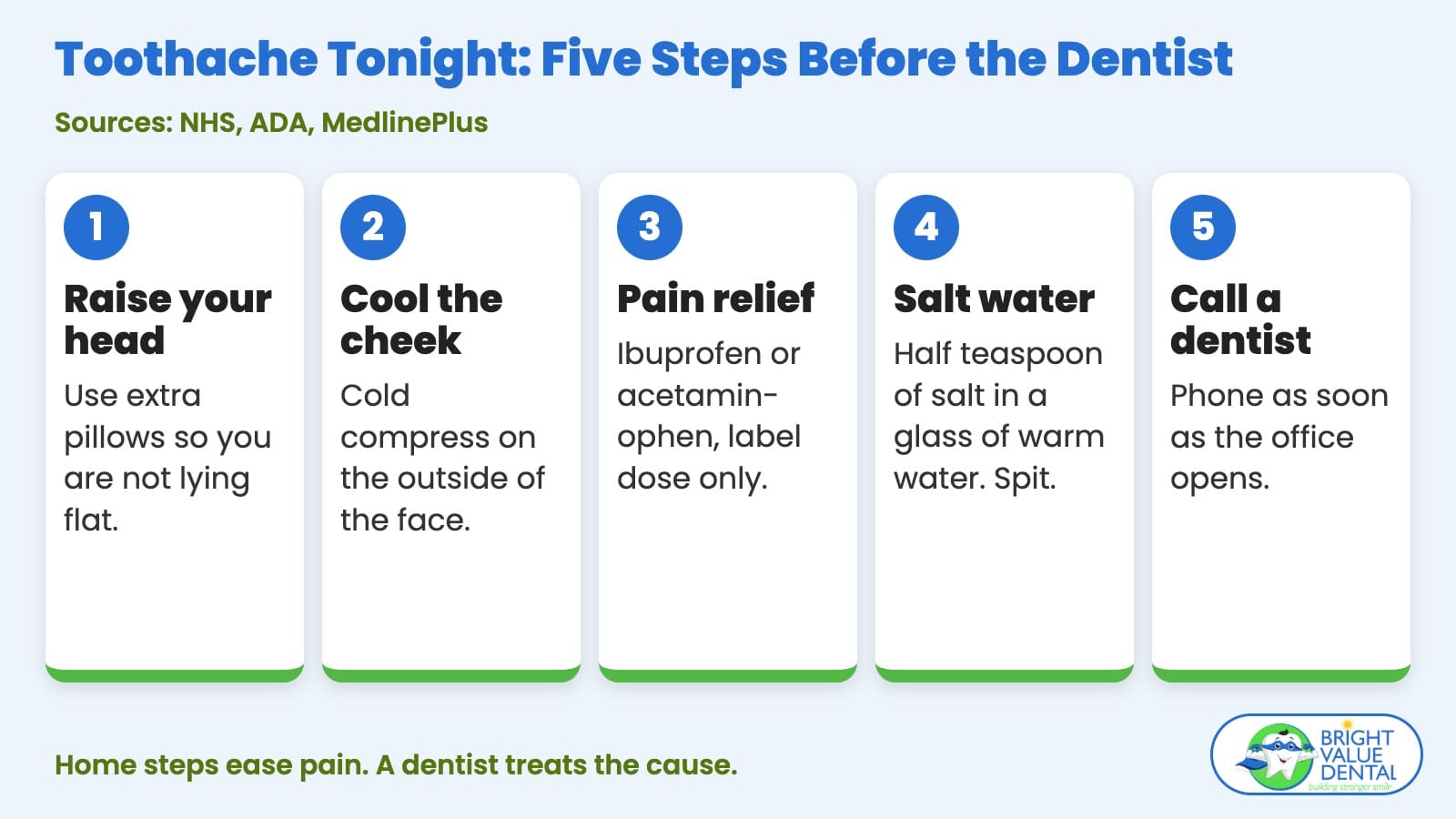
How to stop a toothache at night starts with easing the pain, because only a dentist can remove the cause. The NHS says home steps ease pain while you wait for an appointment. Raise your head, cool the cheek, take label-dose pain relief, and rinse with salt water.
Follow these steps in order tonight.
- Prop your head on extra pillows so you are not lying flat.
- Rinse with warm water and gently floss out trapped food, as the ADA advises.
- Hold a cold compress on the outside of the cheek. The ADA recommends cold compresses on the face for swelling after a cracked tooth.
- Take ibuprofen or acetaminophen exactly as the label directs.
- Rinse with half a teaspoon of salt in a glass of warm water, then spit it out, as the NHS describes.
- Skip very hot, very cold, and sugary food and drinks, and do not smoke, per the NHS.
- Call a dentist as soon as the office opens.
The graphic below shows the steps in order.
The same steps help with sleep, which is the next problem to solve.
How to Sleep with a Toothache
How to sleep with a toothache comes down to a raised head, a cooled cheek, and pain relief taken before bed. Sleeping on the side away from the sore tooth also avoids pressing on it. Raise your head on two or more pillows and keep the cold compress to short sessions.
Eat a soft dinner and skip the sore side when you chew. The NHS suggests soft foods such as yogurt or scrambled eggs, and a soft toothbrush. Pain that still prevents sleep after these steps needs a dentist soon.
What to Take for a Toothache at Night
What to take for a toothache at night is ibuprofen or acetaminophen, used exactly as the label directs. The NHS lists both for toothache. Never exceed the label limit, because a higher dose does not work better and can be dangerous, according to the NHS.
The table below compares common choices using what named sources report.