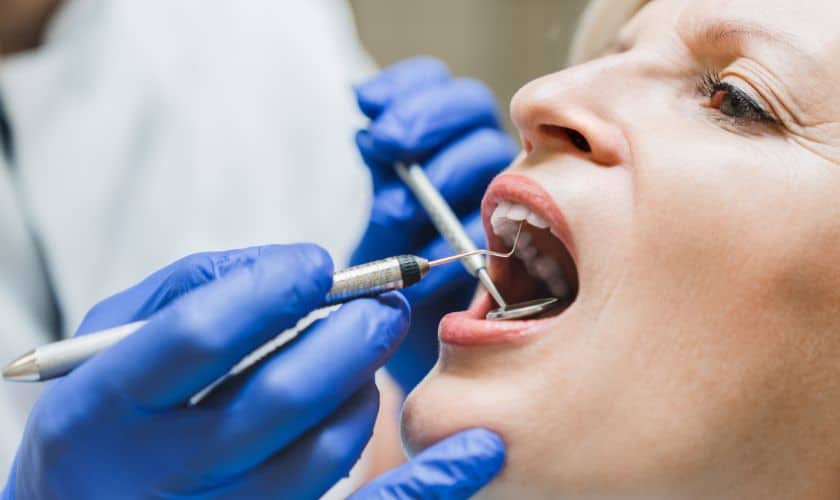
Maintaining healthy gums after periodontal treatment starts with a clear plan and consistent follow-through. Periodontal disease is a chronic condition, which means it can return if the bacteria that caused it build up again. According to the CDC, about 47.2% of American adults aged 30 and older have some form of periodontitis, and that number jumps to 70.1% in adults 65 and older. With proper daily care, routine professional cleanings, and a few lifestyle adjustments, you can keep your gums stable and your teeth strong for years. At our Houston dental office, we help patients in Gulfton, Bellaire, Sharpstown, and throughout Southwest Houston protect their gum health long after treatment ends.
Our team provides periodontal disease treatment that includes scaling and root planing, ongoing monitoring, and personalized home care plans.
Can You Have Healthy Gums After Periodontitis?
You can have healthy gums after periodontitis with the right combination of professional care and at-home habits. Periodontitis causes damage to gum tissue and the bone that supports your teeth, and while that damage cannot be fully reversed, it can be stopped and managed. A study published in the Compendium of Continuing Education in Dentistry found that regular periodontal maintenance can prevent tooth loss in up to 85% of patients over long-term follow-up periods of up to 53 years. That is a strong success rate, and it shows that periodontal disease does not have to mean losing your teeth.
The key is understanding that periodontitis is a chronic condition, similar to diabetes or high blood pressure. It does not go away completely, but it can be controlled. We see patients throughout the Meyerland and Brays Oaks communities who have maintained stable, healthy gums for years after their initial treatment simply by sticking with their maintenance schedule and daily care routine.
What Periodontal Treatment Does for Your Gums
Periodontal treatment removes the harmful bacteria, plaque, and tartar that have built up below the gumline. The most common non-surgical treatment is scaling and root planing, a deep cleaning procedure where we clean the root surfaces of your teeth and smooth them to help your gums reattach. This reduces the depth of the pockets between your teeth and gums where bacteria collect and cause inflammation.
After this initial treatment, your gums need time to heal. The gum tissue tightens around the teeth, pocket depths decrease, and chronic inflammation begins to calm down. Our general dentistry services include a full evaluation of your gum health before, during, and after this process.
For some patients in Houston, additional steps may be needed. If gum disease has progressed to the point where teeth are severely compromised, a tooth extraction may be recommended to protect the surrounding teeth and bone. Dr. David Yu evaluates each case individually and always works to save natural teeth whenever possible.
Daily Oral Hygiene Habits That Protect Treated Gums
Your daily habits at home are just as important as your professional cleanings. After periodontal treatment, bacteria begin to repopulate in your mouth almost immediately. Research shows that harmful bacteria can return to destructive levels in about 9 to 11 weeks, which is approximately 90 days. This is why daily brushing and flossing matter so much.
Brush at least twice per day for two full minutes each time. Use a soft-bristled toothbrush or an electric toothbrush and fluoride toothpaste. Focus extra attention on the gumline, where bacteria tend to gather. Floss at least once per day, curving the floss around each tooth and sliding it gently below the gumline. An interdental brush or water flosser can also help reach areas that traditional floss may miss.
An antimicrobial mouth rinse can be a helpful addition to your routine. It helps reduce bacteria between brushings. Ask us which rinse would work best for your needs during your next visit at our Southwest Houston office.
Our preventive care program includes personalized coaching on brushing and flossing technique, product recommendations, and risk assessments based on your specific situation.
Why Periodontal Maintenance Visits Matter
Periodontal maintenance visits differ from standard dental cleanings. A regular cleaning focuses on tooth surfaces above the gumline. A periodontal maintenance appointment goes deeper, cleaning below the gumline to remove bacteria and tartar from the pockets around your teeth. The dentist also measures pocket depths, checks for bleeding, and monitors changes in gum tissue or bone support.
Most patients who have been treated for periodontitis benefit from maintenance visits every three to four months. A 2024 retrospective study found that patients on a three-month maintenance schedule had an 8% disease recurrence rate, compared to 12% for patients seen every six months and 20% for those who only came in once per year. This data makes a strong case for staying on a shorter recall cycle after treatment.
Skipping maintenance visits is one of the biggest reasons gum disease comes back. A study published in the Journal of Dentistry and Oral Care found a significant relationship between years without maintenance visits and the rate of periodontitis recurrence. Patients who completed treatment but did not return for follow-up showed disease recurrence in most cases.
Families across Alief, Sharpstown, and the greater Houston area trust our office for consistent, thorough gum disease care and maintenance.
How Nutrition Supports Gum Healing and Recovery
What you eat directly affects your gum health. After periodontal treatment, your body needs the right nutrients to repair tissue, fight infection, and keep inflammation in check.
Vitamin C plays a critical role. A 2021 study published in Nutrition Reviews analyzed 15 clinical trials across six countries involving 1,140 participants, along with CDC survey data from 8,210 U.S. residents. The results showed a clear link between low vitamin C levels and gum bleeding. Increasing vitamin C intake in those with low levels helped reverse the bleeding. The NIH recommends 90 milligrams per day for men and 75 milligrams for women. Good sources include bell peppers, kiwi, oranges, broccoli, and kale.
Vitamin D supports the bone that holds your teeth in place. Researchers have linked vitamin D deficiency to a higher risk for periodontal disease. Sunlight exposure and foods like fatty fish, eggs, and fortified dairy products help maintain healthy levels. Calcium is also essential, with the NIH recommending 1,000 to 1,200 milligrams per day from dairy, leafy greens, and fortified plant milks.
Our team at our dental cleanings program also emphasizes nutrition education for younger patients, helping build habits that support lifelong gum health.
Lifestyle Changes That Help Your Gums Stay Strong
Several lifestyle factors can make or break your results after periodontal treatment. Smoking is one of the most damaging. The CDC reports that 64.2% of current smokers have periodontal disease. Smoking restricts blood flow to the gums, slows healing, and weakens the body’s ability to fight bacteria. If you smoke, quitting is one of the most impactful things you can do for your treated gums.
Stress weakens your immune system, making it harder to control the bacteria in your mouth. Finding ways to manage stress through exercise, sleep, or other methods supports gum health. If you grind or clench your teeth at night, talk to us about a night guard. The added pressure from grinding can accelerate bone loss around treated teeth.
Managing existing health conditions also plays a role. Diabetes has a well-documented two-way relationship with gum disease. People with diabetes are more likely to develop periodontitis, and untreated gum disease can make blood sugar harder to control. Keeping your diabetes managed helps protect your gums, and keeping your gums healthy supports your metabolic health.
If unexpected symptoms develop, such as swelling, persistent bleeding, or sudden tooth pain, our emergency dental care team can see you quickly, often on the same day.
Periodontal Maintenance vs. Standard Dental Cleaning
| Feature | Standard Dental Cleaning | Periodontal Maintenance |
|---|---|---|
| Who it is for | Patients with healthy gums | Patients treated for periodontitis |
| Cleaning depth | Above the gumline | Above and below the gumline |
| Pocket depth measurement | Basic screening | Full charting and comparison to prior visits |
| Recommended frequency | Every 6 months | Every 3 to 4 months |
| Focus | Prevention of new disease | Preventing recurrence of existing disease |
| Bacterial disruption | Surface-level plaque removal | Subgingival debridement to disrupt bacterial colonies |
Sources: American Academy of Periodontology; CDC Division of Oral Health; Compendium of Continuing Education in Dentistry
Understanding the difference matters. A standard cleaning is not a substitute for periodontal maintenance if you have been treated for gum disease. Our cosmetic dentistry services can also help patients who want to improve the appearance of their smile after their gum health has stabilized.
Frequently Asked Questions
How Long Does It Take for Gums to Heal After Periodontal Treatment?
Gums typically take about two to four weeks to heal after scaling and root planing. During this time, you may notice some tenderness, mild swelling, and sensitivity to hot or cold. Full tissue tightening and pocket depth reduction can take several months. Your dentist in Houston will monitor your progress at follow-up visits. Sticking with gentle brushing, flossing, and any prescribed rinses speeds up the process.
What Vitamin Am I Deficient in if My Gums Are Receding?
The most common vitamin deficiency linked to receding gums is vitamin C. A 2021 University of Washington study found that low vitamin C levels in the bloodstream were associated with gum bleeding on gentle probing, and increasing vitamin C intake helped reverse the problem. Vitamin D deficiency has also been connected to a higher risk of periodontal disease and bone loss. If you are experiencing gum recession in the Sharpstown or Meyerland area, schedule an appointment so we can evaluate your gum health and discuss possible contributing factors.
What Are Two Health Conditions Linked to Gum Disease?
Two health conditions linked to gum disease are heart disease and diabetes. A 2025 scientific statement from the American Heart Association, published in Circulation, confirmed that periodontal disease is associated with a higher risk of heart attack, stroke, atrial fibrillation, and heart failure. The ADA also recognizes the two-way relationship between diabetes and periodontitis. Managing gum disease may help improve blood sugar control, and managing diabetes supports healthier gums.
Patients who need help covering the cost of ongoing periodontal care can review our payment and insurance options to find a plan that works for their budget.
What Autoimmune Disease Affects the Gums?
Several autoimmune diseases affect the gums, but rheumatoid arthritis (RA) is the most well-studied. Research shows that approximately 80% to 85% of individuals with RA experience periodontitis, compared to about 40% in the general population. Systemic lupus erythematosus (SLE) and Sjogren’s syndrome are also linked to increased gum problems. A 2024 meta-analysis found that periodontitis prevalence in lupus patients was 67%. If you have an autoimmune condition, more frequent periodontal maintenance visits can help protect your gums.
Can I Kiss My Partner with Periodontitis?
You can kiss your partner with periodontitis, but it is worth knowing that the bacteria responsible for gum disease can be transferred through saliva. The bacteria alone do not automatically cause periodontitis in another person. Whether gum disease develops depends on the other person’s immune response, oral hygiene, genetics, and overall health. The best way to reduce any risk is for both partners to maintain good oral hygiene and attend regular dental visits.
We also welcome patients without insurance. Our affordable dental care options help make periodontal maintenance accessible for everyone in Houston.
How Often Should I See the Dentist After Periodontal Treatment?
After periodontal treatment, most dentists recommend maintenance visits every three to four months. This schedule is based on research showing that harmful oral bacteria can repopulate to damaging levels in about 90 days. Patients on a three-month recall cycle have significantly lower rates of disease recurrence than those who wait six months or longer. Your dentist may adjust your schedule based on how well your gums are responding and your individual risk factors.
Your Next Step
Periodontal treatment is not a one-time fix. It is the beginning of a long-term plan to keep your gums healthy and your teeth in place. The patients who get the best results commit to daily home care, show up for maintenance visits, eat well, and address lifestyle factors like smoking and stress. With the right support, you can keep your gums stable for decades.
If you need a periodontal evaluation or maintenance cleaning in Southwest Houston, we are here to help.
Our dental crown services are also available for patients who need to restore teeth that were weakened during their battle with gum disease.
Families across Houston looking for a pediatric dentist can also trust our team to help their children build the oral health habits that prevent gum disease from developing in the first place.
Bright Value Dental has been serving the Bellaire, Sharpstown, Gulfton, and Southwest Houston community for over 25 years. Call us at 713-668-1600 to schedule your next periodontal maintenance visit.