
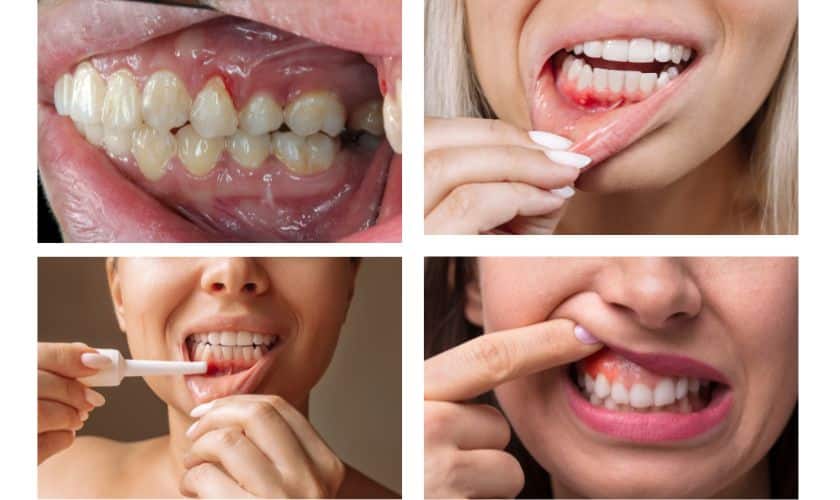
Treating gum disease in its early stages involves professional dental cleaning to remove plaque and tartar, followed by consistent brushing and flossing at home. The earliest stage of gum disease is called gingivitis, and the American Dental Association (ADA) confirms it is fully reversible when caught early. The key is to act quickly. According to the CDC, about 42% of American adults aged 30 and older have some form of periodontal disease. Most of them do not realize it because gingivitis rarely causes pain. With the right treatment, gum inflammation can improve in as little as two weeks, and long-term damage can be completely prevented.
Why Early Treatment Matters
Gingivitis is the only stage of gum disease that can be fully reversed. Once it progresses to periodontitis, the damage to bone and connective tissue is permanent. The Cleveland Clinic states that periodontitis causes the gums, ligaments, and bone to break down over time, and this damage cannot be fully restored.
Early treatment stops this progression before it starts. A professional cleaning removes the plaque and tartar that cause inflammation, and improved brushing and flossing at home prevent new buildup. Research published in the Journal of Periodontal Research found that gum inflammation can begin to decrease within 7 to 10 days after a thorough professional cleaning.
The longer gingivitis goes untreated, the greater the chance it will advance. Our periodontal disease treatment in Southwest Houston is designed to catch gum problems early and stop them from getting worse.
What Happens During a Professional Cleaning
A standard professional cleaning, called a prophylaxis, is the first-line treatment for gingivitis. During this procedure, a dental hygienist uses special instruments to remove plaque and tartar from above and below the gum line. This is something a toothbrush and floss alone cannot do.
The ADA recommends professional cleanings at least twice a year for most patients. For people with signs of gum disease, more frequent cleanings may be needed. During your visit, we also measure the depth of the pockets around each tooth. Healthy gum pockets are 1 to 3 millimeters. Pockets deeper than 3 millimeters are a sign that gum disease may be present.
Patients in the Bellaire and Sharpstown communities who keep up with their twice-yearly cleanings have the best chance of catching gingivitis before it causes any lasting damage.
We provide thorough preventive dental care for patients of all ages, including exams, cleanings, and personalized home care instructions.
Scaling and Root Planing for Early Periodontitis
If gingivitis has already progressed to early periodontitis, a standard cleaning may not be enough. In this case, we recommend scaling and root planing, also called a deep cleaning. This is a non-surgical procedure done under local anesthesia.
Scaling removes plaque and tartar from below the gum line, all the way to the bottom of the gum pocket. Root planing smooths the surface of the tooth roots so the gums can reattach more easily. A 2015 study reviewed by the Journal of the American Dental Association analyzed 72 clinical trials and found that scaling and root planing improves gum attachment by an average of 0.5 millimeters. This may sound small, but it is often enough to halt the progression of the disease and restore gum health.
The procedure usually takes one to two visits, depending on how many areas of the mouth need treatment. Most patients experience mild soreness afterward that resolves within a few days.
At our office, we perform scaling and root planing with gentle techniques and local anesthesia to keep you comfortable throughout the process.
How to Treat Gum Disease at Home Between Visits
Professional treatment is only part of the equation. What you do at home between dental visits plays a major role in reversing gingivitis and keeping it from coming back.
The ADA recommends brushing twice a day with a soft-bristled toothbrush and fluoride toothpaste. Hold the brush at a 45-degree angle to the gum line and use short, gentle strokes. This technique removes plaque where it does the most damage. Floss once a day to clean between teeth where the brush cannot reach.
An antimicrobial mouthwash can provide additional protection by reducing the number of bacteria in the mouth. The ADA notes that mouthwash is a helpful supplement but should not replace brushing and flossing.
Quitting tobacco is one of the most effective things you can do for your gums. The NIH MedlinePlus publication reports that more than 60% of current smokers have periodontal disease. Smoking weakens the immune system and slows healing, making gum disease harder to treat and more likely to come back.
Eating a balanced diet rich in vitamin C also supports gum health. Vitamin C helps the body repair tissue, including the gum tissue damaged by early-stage inflammation.
We provide comprehensive general dentistry that includes personalized home care coaching so you know exactly how to maintain your results between visits.
Professional vs. At-Home Gum Disease Treatment Comparison
| Treatment Method | What It Does | Best F |