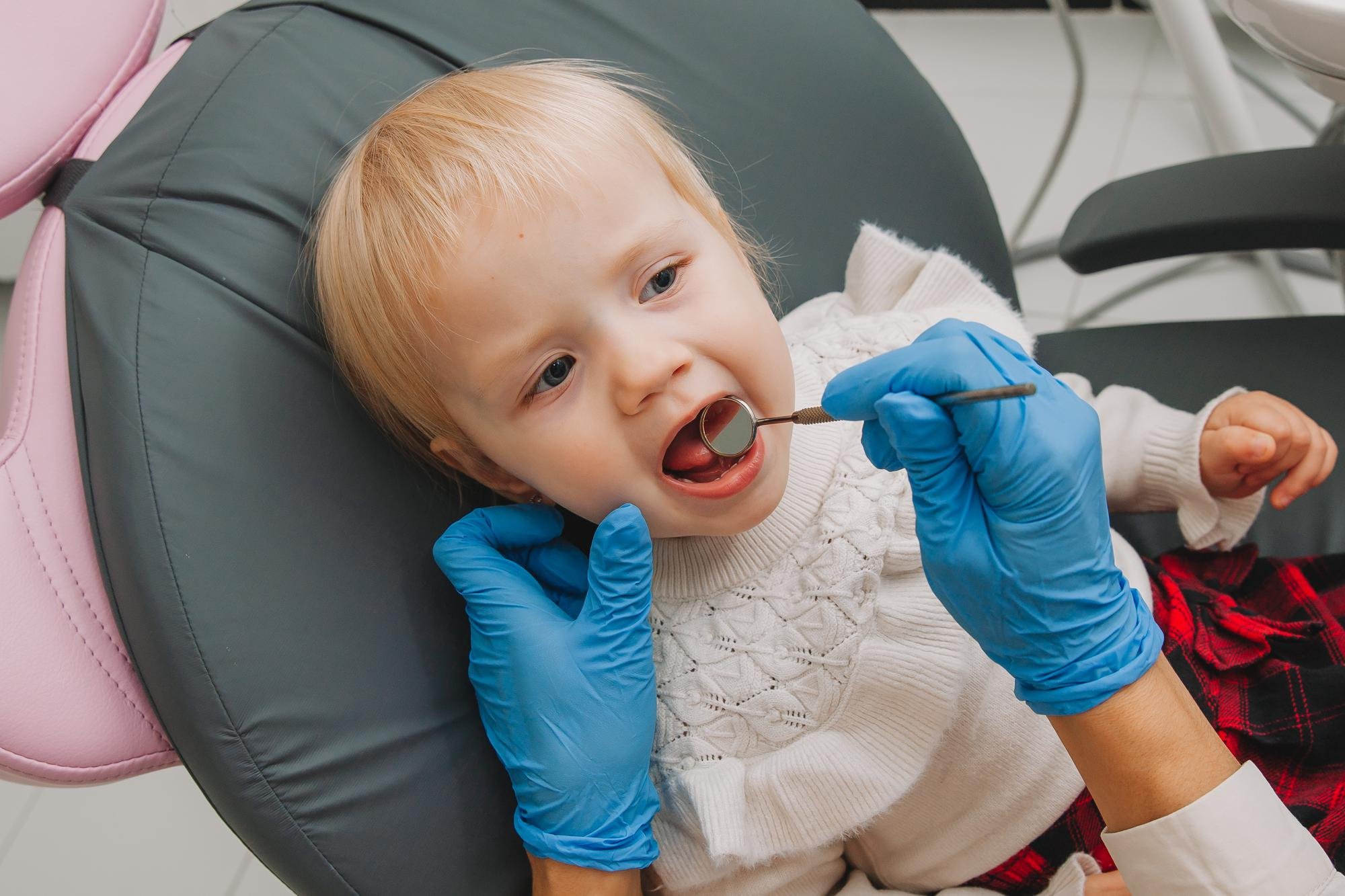
Children should first see a dentist by their first birthday, or within six months of their first tooth coming in, whichever happens first. This is the recommendation of the American Academy of Pediatric Dentistry (AAPD), the American Dental Association (ADA), and the American Academy of Pediatrics (AAP). Despite these clear guidelines, an AAPD survey found that 74% of U.S. parents do not take their child to the dentist by age one. Many families in Houston wait until age three, four, or even later, which gives cavities and other problems time to develop unnoticed. At our Southwest Houston dental office, we welcome babies, toddlers, and children of all ages for early dental visits that are gentle, educational, and stress-free.
Our pediatric dentistry team is experienced with young children and makes every visit comfortable for both kids and parents.
Why Baby Teeth Need Professional Care Early
Baby teeth are not just temporary placeholders. They help children chew food properly, speak clearly, and hold space in the jaw for permanent teeth to come in correctly. When baby teeth are lost too early due to decay or infection, the surrounding teeth can shift and create alignment problems that may need correction later. According to the AAPD, childhood tooth decay is five times more common than childhood asthma and 20 times more common than childhood diabetes. It is the single most common chronic disease in children in the United States.
The CDC reports that about 23% of children aged two to five have experienced cavities. Among children aged six to eight, more than half have had at least one cavity in a baby tooth. These numbers show that decay starts early, often before parents realize there is a problem. A child who sees a dentist in the first year of life gets the benefit of early screening, fluoride guidance, and personalized advice on feeding habits that can prevent decay from taking hold.
We provide preventive dental care for patients of all ages, including young children in the Bellaire, Gulfton, and Sharpstown communities.
Should a 2 Year Old Go to the Dentist?
A 2 year old should absolutely go to the dentist. In fact, major dental organizations recommend that the first visit happen a full year earlier, by the child’s first birthday. If your child is already two and has not seen a dentist yet, now is the time to schedule that first visit. By age two, most children have about 16 of their 20 baby teeth, and those teeth are susceptible to decay from sugary foods, juice, and milk.
A survey from Michigan Medicine found that more than half of parents with young children did not receive guidance from a pediatrician or dentist about when to start dental visits. Another AAPD survey found that 26% of mothers believed children only need to see a dentist if there is a serious problem. These gaps in information contribute to delayed care, and delayed care often leads to bigger problems down the road.
Data from the AAPD shows that dental costs for children who have their first visit before age one are 40% lower over the first five years compared to children who do not see a dentist until later. Early visits cost less because they focus on prevention rather than treatment.
Families across Meyerland, Brays Oaks, and Alief trust our children’s dental cleaning services to keep their kids on track from the start.
What Happens During a Child’s First Dental Visit
A child’s first dental visit is mostly educational. For infants and toddlers, the appointment usually lasts about 30 to 45 minutes. Depending on the child’s age, the visit may include a gentle exam of the teeth, gums, jaw, and bite. The dentist checks for early signs of decay, evaluates tooth development, and looks at the soft tissues in the mouth.
For very young children, a common technique is the knee-to-knee exam. The child sits on the parent’s lap facing the parent while the dentist examines the child’s mouth from the other side. This keeps the child secure and comfortable.
The dentist will also talk to parents about feeding habits, bottle use, pacifier habits, thumb-sucking, fluoride toothpaste, and how to clean young teeth at home. At our Houston office, Dr. David Yu and our team use games, toys, and TVs in every room to help children feel at home.
We provide complete general dentistry for the whole family, so parents and children can be seen at the same practice.
Signs Your Child Should See a Dentist Sooner
While the recommended age for a first visit is by the first birthday, some situations call for an earlier or more urgent appointment. Parents in Southwest Houston should bring their child in right away if they notice white or brown spots on the teeth, red or swollen gums, bleeding when brushing, difficulty chewing or refusing food, or a visible chip or break in a tooth.
Children can also develop dental emergencies. A fall that cracks or knocks out a tooth, sudden facial swelling, or persistent tooth pain all require prompt care. Our emergency dental team can see children the same day for urgent issues.
According to the CDC, untreated cavities can cause pain that interferes with eating, sleeping, speaking, and learning. Children who experience dental pain in school are more likely to miss class and fall behind. Getting ahead of these problems with an early first visit makes a real difference.
How to Help Your Child Feel Comfortable at the Dentist
Many parents worry about how their child will react to the dentist. The best strategy is to start visits early, before any problems develop. Children who begin dental visits by age one grow up seeing the dentist as a normal, positive part of life. Research from the AAPD confirms that early exposure builds comfort and reduces dental anxiety in later years.
At home, you can prepare your child by reading age-appropriate books about visiting the dentist, practicing “opening wide” in a playful way, and speaking positively about dental care. Avoid using words like “hurt” or “needle,” even to reassure your child. Children pick up on those words and may become anxious before they arrive.
Our office in the Bellaire and Gulfton area was built with children in mind. We have a welcoming environment with games and a gentle approach that helps nervous children relax. Dr. Yu has been working with children in Southwest Houston for over 25 years.
If your child has gum health concerns, early evaluation allows us to address them before they progress.
How Early Dental Visits Save Time and Money Later
Prevention is almost always less expensive than treatment. A routine checkup for a young child takes a fraction of the time and cost of a filling, a crown, or a sedation appointment for multiple cavities. The AAPD reports that dental costs over a child’s first five years are 40% lower when the first visit happens before the first birthday.
When cavities go undetected in young children, they spread quickly through soft baby teeth. A child who comes in for a first visit at age four or five with multiple cavities may need several long appointments or sedation to complete the work. Catching problems early, or preventing them entirely, saves parents time, money, and stress.
We accept most PPO dental plans, Medicaid, CHIP, MCNA, DentaQuest, and TMHP. Visit our payment and insurance page for a full list of accepted plans.
For families without coverage, we also offer affordable dental care options to make pediatric visits accessible.
Recommended Dental Visit Timeline for Children
| Age | Milestone | What the Dentist Does |
|---|---|---|
| 6 to 12 months | First tooth appears | First dental visit, oral exam, parent education on feeding and cleaning |
| 1 to 2 years | More baby teeth erupt | Monitor tooth development, fluoride varnish if recommended, check for early decay |
| 2 to 3 years | Full set of 20 baby teeth | Full oral exam, gentle cleaning, evaluate bite and alignment |
| 3 to 5 years | Preparing for permanent teeth | Cleanings, sealants on molars, X-rays if needed, habit counseling |
| 6 years and older | Permanent teeth begin arriving | Monitor transition, sealants on permanent molars, preventive care continues |
Sources: American Academy of Pediatric Dentistry; American Dental Association; CDC Division of Oral Health
Healthy cosmetic dental results later in life start with a strong foundation of care in childhood.
Frequently Asked Questions
How Long Is Too Long Without Going to the Dentist?
Going longer than six months without a dental visit is too long for most children. The ADA and AAPD recommend checkups every six months starting from the first visit. Plaque and tartar can build up quickly on young teeth, and cavities in baby teeth can progress faster than in adult teeth because the enamel is thinner. For children with a higher risk of decay, dentists may recommend visits every three to four months. If your child in the Sharpstown or Alief area has not been to the dentist recently, call our office to get back on schedule.
Is It Bad to Not Go to the Dentist for 4 Years?
Not going to the dentist for four years is a long gap, especially for a child. The CDC reports that about 20% of children aged five to eleven have at least one untreated decayed tooth. Four years without professional cleanings and exams gives cavities and gum inflammation time to develop and worsen. Early decay that could have been treated simply may turn into a situation requiring more extensive work. The sooner a child gets back into regular visits, the better.
How Late Is Too Late for the Dentist?
It is never too late to start dental care, but earlier is always better. Children who do not see a dentist until age four or five are more likely to already have cavities that need treatment. A pediatric dental study found that only about 3% of children visited the dentist for a routine checkup as their first visit; the rest came in because of pain or visible problems. Starting early means the dentist can catch issues before they cause discomfort. If your child has not been to the dentist yet, there is no reason to wait any longer.
In some cases, delayed care leads to situations where a tooth extraction becomes the only option for a severely decayed baby tooth.
How Often Should Children See the Dentist After Their First Visit?
Children should see the dentist every six months after their first visit. This schedule allows the dental team to monitor tooth development, catch early signs of decay, apply preventive treatments like fluoride and sealants, and reinforce good brushing and flossing habits. Some children with higher cavity risk may benefit from more frequent visits. Dr. Yu will recommend a schedule based on your child’s individual needs.
Do Baby Teeth Really Need Dental Care?
Baby teeth absolutely need dental care. They serve important functions including helping children eat and speak, guiding the permanent teeth into the correct position, and supporting the development of the jawbone. The AAPD reports that more than 50% of children experience cavities in their primary teeth. Untreated decay in baby teeth can spread to neighboring teeth, cause pain and infection, and damage the developing permanent teeth underneath. Taking care of baby teeth sets the stage for a healthy adult smile.
If your child needs a minor cosmetic repair on a front tooth, dental bonding is a quick and gentle option.
What Age Should a Child Start Brushing Their Own Teeth?
Most children can start brushing their own teeth with supervision around age six or seven, once they have the hand coordination to do it well. Before that age, parents should brush their child’s teeth twice daily. Use a rice-grain-sized amount of fluoride toothpaste for children under three and a pea-sized amount for ages three to six. Even after children begin brushing on their own, parents should supervise to make sure all surfaces are cleaned for a full two minutes.
We also provide pediatric dental care for children of all ages, from a baby’s first tooth through the teen years.
Where to Go From Here
Getting your child to the dentist early is one of the most valuable things you can do for their long-term health. The first visit should happen by age one, and regular checkups every six months keep small issues from becoming big ones. Children who see a dentist early have fewer cavities, lower dental costs, and less anxiety about dental care as they grow up.
Our children’s dentistry program in Southwest Houston is built around making young patients feel welcome and helping parents understand how to protect their child’s teeth at home.
Bright Value Dental has proudly served families in Bellaire, Sharpstown, Gulfton, Meyerland, and throughout Southwest Houston for over 25 years. Call us at 713-668-1600 to schedule your child’s first dental visit today.