
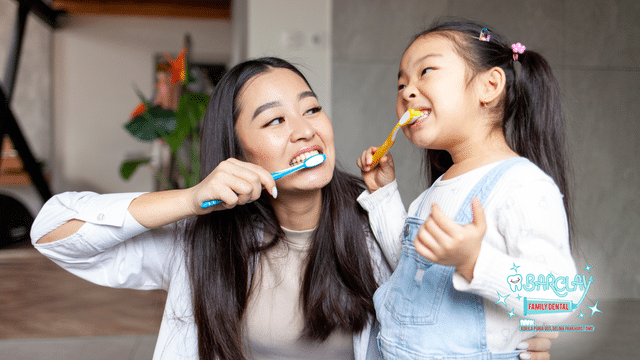
Dental habits that support healthy teeth in kids include brushing twice a day with fluoride toothpaste, flossing as soon as two teeth touch, eating foods that strengthen enamel, drinking fluoridated water, and visiting the dentist every six months starting by a child’s first birthday. These habits work together to remove plaque, starve cavity-causing bacteria, and harden tooth enamel against acid attacks. According to the Centers for Disease Control and Prevention (CDC), more than half of children aged 6 to 8 have had at least one cavity in a baby tooth. The good news is that nearly every cavity is preventable when the right habits start early. This article covers exactly how to build each habit, when to start, and what the research says about why these routines work.
What Dental Habits Support Healthy Teeth in Kids?
The dental habits that support healthy teeth in kids are twice-daily brushing with fluoride toothpaste, daily flossing, a low-sugar diet rich in calcium, regular dental checkups with professional fluoride treatments and sealants, and consistent daily routines that make oral care a natural part of the child’s day. Each habit targets a different part of the decay process. Brushing removes the plaque film where bacteria live. Flossing cleans the tight spaces a toothbrush cannot reach. A tooth-friendly diet limits the sugar that bacteria convert into enamel-destroying acid. Fluoride hardens the enamel so it resists those acid attacks. Dental checkups catch early problems before they become painful.
A Children’s Dental Health Survey found that only 64% of parents say their child brushes twice a day, and just 23% say their child flosses regularly. That means one in three children does not brush often enough, and three out of four children skip flossing entirely. Closing those gaps is the single biggest opportunity for parents who want to protect their child’s teeth. The habits themselves are simple. The challenge is building them into a daily routine that sticks.
Why Is Dental Health Important for Children?
Dental health is important for children because untreated tooth decay causes pain, infection, difficulty eating and speaking, missed school days, and damage to the permanent teeth developing beneath the gums. The CDC reports that cavities are the most common chronic disease of childhood in the United States. By age 9, half of all children have experienced at least one cavity in a primary or permanent tooth. Untreated decay does not stay contained. A small cavity grows deeper over time, reaching the nerve and potentially causing an abscess that requires emergency care.
The consequences extend beyond the mouth. The CDC reports that 34 million school hours are lost each year to unplanned dental visits, and dental-related issues cost more than $45 billion annually in the United States. Research published in the American Journal of Public Health found that children with poor oral health miss an average of 2.1 school days per year due to dental pain. Baby teeth also serve as placeholders for permanent teeth. Losing a baby tooth too early from decay causes the surrounding teeth to shift into the gap, which creates crowding and misalignment when the permanent tooth tries to erupt. Building strong dental habits early protects teeth, saves money, and supports a child’s ability to eat, learn, and grow without pain. We provide pediatric dentistry specifically to help children build these habits from their very first tooth.
How Do You Teach a Child To Brush Their Teeth Properly?
You teach a child to brush their teeth properly by starting early, demonstrating the correct technique, brushing together as a family, and making the routine enjoyable so the habit sticks for life. The American Dental Association (ADA) recommends cleaning a baby’s mouth from the very first days after birth by wiping the gums with a clean, damp cloth after feeding. As soon as the first tooth appears, parents should begin brushing with a soft-bristled infant toothbrush and a rice-grain smear of fluoride toothpaste.
Technique matters more than speed. Teach children to hold the brush at a 45-degree angle to the gumline and use small circular motions instead of hard back-and-forth scrubbing. Circular motions clean along the gum margin where plaque concentrates most heavily. Every brushing session should cover all three surfaces of each tooth: the outer face, the inner face, and the chewing surface. Brushing the tongue removes bacteria that contribute to plaque buildup and bad breath.
Making brushing fun helps children embrace the habit rather than resist it. Brush alongside your child so they see it as something the whole family does together. Let them pick their own toothbrush color or character. Use a two-minute timer, a favorite song, or a brushing app to keep them engaged for the full recommended duration. Research shows that children’s brushing frequency closely mirrors their parents’ frequency. A study published in the European Archives of Paediatric Dentistry found a statistically significant association between parent and child brushing habits: children whose parents brushed twice daily were far more likely to brush twice daily themselves. A children’s dentist can demonstrate proper technique during a checkup and give your child personalized coaching.
How Long Should a Child Brush Their Teeth?
A child should brush their teeth for two minutes, twice a day. The ADA and the CDC both recommend two minutes per session as the minimum duration needed to remove plaque effectively from all tooth surfaces. A Children’s Dental Health Survey found that only 59% of children brush for at least two minutes. That means more than two out of every five children cut their brushing sessions short, leaving plaque on the teeth that bacteria will feed on throughout the day.
Two minutes feels long to a young child. Breaking the mouth into four sections, upper right, upper left, lower right, lower left, and spending 30 seconds on each section makes the time manageable. Electric toothbrushes with built-in two-minute timers can help children stay on track. Playing a short song or setting a phone timer gives children a clear start-and-stop signal. The goal is consistency. A child who brushes for two full minutes every morning and every night builds the muscle memory and routine that carries into adulthood.
Why Is Brushing Before Bed More Important Than in the Morning?
Brushing before bed is more important than brushing in the morning because saliva flow drops significantly during sleep, leaving teeth vulnerable to acid attacks all night. Saliva is the mouth’s natural defense system. It washes away food particles, neutralizes acid produced by bacteria, and delivers calcium and phosphate minerals back to the enamel surface. During waking hours, saliva production runs at full capacity. During sleep, saliva flow slows to a fraction of its daytime level.
When a child goes to bed without brushing, the plaque, food particles, and bacteria left on the teeth produce acid for hours without saliva to wash it away or neutralize it. The enamel sits in a low-pH environment all night, losing minerals continuously. The National Institute of Dental and Craniofacial Research (NIDCR) notes that limiting food and drink after bedtime brushing is one of the most effective steps parents can take because the reduced saliva during sleep cannot protect the teeth the way it does during the day. A child who brushes only once should always make it the bedtime session.
At What Age Can a Child Brush Their Teeth by Themselves?
Most children can brush their teeth effectively by themselves around age 7 to 8, though some children may need supervision longer. The American Academy of Pediatric Dentistry (AAPD) recommends that parents brush their child’s teeth or supervise and finish each brushing session until the child demonstrates reliable independent technique. Children under 7 typically lack the manual dexterity and coordination needed to reach every surface of every tooth, especially the back molars and the gumline.
A helpful test is the “shoelace rule.” If a child cannot tie their own shoelaces, they probably do not have the fine motor skills to brush effectively on their own. Until that milestone, let the child hold the brush and practice, but the parent should go over the teeth afterward to make sure all surfaces are clean. A CDC survey found that approximately one third of children brushed only once daily and 14.5% of children aged 3 to 15 did not start brushing until age 3 or later. Establishing the habit early and maintaining parental involvement during the learning years builds the oral hygiene foundation that lasts a lifetime.
When Should Kids Start Flossing?
Kids should start flossing as soon as they have two teeth that touch each other, which usually happens between 8 and 12 months of age. Toothbrush bristles cannot reach the contact points between teeth or the areas just below the gumline where two teeth sit side by side. Plaque that accumulates in these tight spaces produces acid that attacks the enamel from both sides, creating cavities between the teeth that are invisible to the eye but clearly visible on dental X-rays.
The Children’s Dental Health Survey reported that only 23% of parents say their child flosses regularly, making flossing the most neglected dental habit among children. Parents should do the flossing for young children until around age 8 to 10, when the child develops enough coordination to maneuver floss between each tooth pair. Floss picks with handles are often easier for small hands than traditional string floss. The key is making flossing part of the nightly routine, right before or right after brushing, so it becomes automatic rather than optional.
What Foods Strengthen Children’s Teeth?
Foods that strengthen children’s teeth are those rich in calcium, phosphorus, and vitamins that support enamel remineralization, including cheese, yogurt, milk, crunchy vegetables, nuts, and water. These foods help teeth in two ways. Calcium and phosphorus are the building blocks of hydroxyapatite, the mineral that makes up tooth enamel. Eating calcium-rich foods supplies the raw materials saliva needs to repair enamel after acid attacks. Crunchy, fibrous foods like carrots, celery, and apples stimulate saliva production, which washes away food particles and neutralizes acid.
- Cheese: Raises the pH in the mouth (reducing acid) and delivers calcium and casein protein that strengthen enamel
- Yogurt: Provides calcium and probiotics that may help reduce cavity-causing bacteria levels
- Crunchy vegetables (carrots, celery, cucumbers): Require chewing that stimulates saliva flow and scrubs plaque from tooth surfaces
- Nuts and seeds: Supply calcium, phosphorus, and healthy fats without sticking to teeth
- Water (especially fluoridated): Rinses food particles, hydrates the mouth, and delivers fluoride to the enamel
- Eggs and fatty fish: Provide vitamin D, which helps the body absorb calcium for stronger enamel
The foods that harm teeth the most are sticky candies, gummy snacks, fruit juice, soda, sports drinks, and starchy snacks like crackers and chips. These foods either cling to tooth surfaces for hours or bathe the teeth in sugar and acid.
| Tooth-Friendly Foods | Why They Help | Tooth-Harmful Foods | Why They Hurt |
|---|---|---|---|
| Cheese, yogurt, milk | Supply calcium and phosphorus for enamel repair; cheese raises oral pH | Gummy candies, taffy, dried fruit | Stick to teeth for hours; feed bacteria continuously |
| Carrots, celery, apples | Stimulate saliva; scrub plaque during chewing | Crackers, chips, pretzels | Starch converts to sugar; gummy paste clings to grooves |
| Nuts, seeds, eggs | Provide calcium, vitamin D, and phosphorus without sticky residue | Soda, juice, sports drinks | Bathe teeth in sugar and acid; sipping extends acid attack duration |
| Water (fluoridated) | Rinses mouth; delivers fluoride; no sugar or acid | Flavored milk, chocolate milk | Added sugar feeds bacteria; lactose pools during sleep if given at bedtime |
Sources: ADA MouthHealthy, NIDCR Tooth Decay Process, CDC Oral Health Tips for Children, Nemours KidsHealth
Are Cavities Due to Poor Hygiene?
Cavities are primarily due to poor oral hygiene, but other factors like diet, genetics, enamel quality, snacking frequency, and bacterial exposure also contribute. Plaque buildup from inadequate brushing and flossing is the most direct cause of cavities. Bacteria in plaque feed on sugar and produce acid that dissolves enamel. A child who brushes inconsistently or misses surfaces during brushing allows plaque to accumulate and harden into tartar, which traps even more bacteria against the tooth.
Some children develop cavities despite good brushing habits because of factors beyond hygiene alone. Enamel thickness and mineral density vary from child to child due to genetics, nutritional status during tooth development, and even illness during early childhood. Children who snack frequently give bacteria more opportunities to produce acid, regardless of what they eat. The NIDCR explains that each eating event triggers a 20-to-30-minute acid attack on the teeth. A child who eats five or six times a day faces five or six separate acid attack cycles. Reducing snacking frequency is one of the most effective habits for protecting teeth. Children who have dental problems despite consistent brushing often benefit from additional fluoride treatments or sealants that add extra layers of protection.
How Do Parents Influence Children’s Dental Habits?
Parents influence children’s dental habits more than any other factor because children learn oral care behaviors by watching and imitating the adults in their household. Research published in the European Archives of Paediatric Dentistry found a statistically significant association between parent and child brushing frequency. Children whose parents brushed twice daily brushed twice daily themselves. Children whose parents brushed once daily or less followed the same pattern. The study concluded that parental modeling is the strongest predictor of a child’s brushing behavior.
Beyond modeling, parents shape habits through supervision, encouragement, and routine-setting. A child who sees brushing and flossing as a family activity rather than a solo chore is more likely to maintain the habit long-term. Positive reinforcement, like a sticker chart for consistent brushing or praise after a dental checkup, builds motivation without creating pressure. Avoiding negative framing is equally important. Threatening a child with the dentist as punishment creates anxiety that makes future dental visits harder for everyone.
Parents also influence their child’s oral bacteria directly. Cavity-causing bacteria, particularly Streptococcus mutans, transfer from caregiver to child through shared utensils, food tasting, and pacifier cleaning. Babies are born without these bacteria. Transmission from caregivers introduces the bacteria that colonize the child’s teeth as they erupt. Parents who maintain their own oral health and avoid sharing utensils reduce the bacterial load they pass to their children. We see the impact of parental habits clearly in our Southwest Houston families: children whose parents brush together with them consistently arrive at checkups with healthier teeth and fewer kids’ dental visits requiring treatment.
Which Professional Dental Habits Protect Children’s Teeth the Most?
The professional dental habits that protect children’s teeth the most are regular checkups every six months, professional fluoride varnish applications, dental sealants on permanent molars, and professional cleanings that remove plaque and tartar home brushing missed. Home care handles the daily maintenance. Professional care handles the deeper protection that home care cannot provide on its own.
The following timeline outlines the recommended professional dental care milestones for children:
- By age 1 (or within 6 months of first tooth): Schedule the first dental visit. The dentist examines the mouth, checks for early decay, applies fluoride varnish, and coaches parents on age-appropriate brushing and diet.
- Every 6 months from age 1 onward: Routine checkups and professional cleanings. The dentist monitors tooth development, applies fluoride varnish, and catches early signs of decay before cavities form.
- Around age 6 (first permanent molars erupt): Apply dental sealants to the six-year molars. The CDC reports that sealants prevent 80% of cavities in molars for two years after application. Children without sealants have almost three times more cavities.
- Around age 12 (second permanent molars erupt): Apply sealants to the second molars. Continue twice-yearly checkups and dental cleanings throughout adolescence.
A Cochrane Review of 22 trials involving more than 12,400 children found that fluoride varnish reduced decay by 37% on primary teeth and 43% on permanent teeth. The ADA reported that children who received both sealants and fluoride treatments were 73% less likely to develop cavities compared to children who received fluoride alone.
Only about 43% of children aged 6 to 11 have received at least one dental sealant, according to CDC data. Closing that gap represents one of the biggest opportunities for preventive care in children’s dentistry today.
Scheduling your child’s children’s dental care visits at the right milestones allows us to apply sealants and fluoride varnish at the ideal time for maximum protection.
Frequently Asked Questions
How Often Should You Replace a Child’s Toothbrush?
You should replace a child’s toothbrush every three months or sooner if the bristles become frayed or splayed. Worn bristles lose their ability to clean effectively along the gumline and between teeth. The ADA recommends replacing the toothbrush after any illness to avoid reintroducing bacteria into the mouth. For electric toothbrush users, replace the brush head on the same three-month schedule.
Should a Child Use an Electric or Manual Toothbrush?
Both electric and manual toothbrushes remove plaque effectively when used with proper technique for the full two minutes. Electric toothbrushes can be helpful for younger children because the oscillating head does some of the brushing work, and built-in timers help children brush for the recommended duration. Manual toothbrushes work well for children who have learned good circular brushing technique. The best toothbrush for a child is the one they will use consistently and happily.
When Should You Not Brush Your Teeth?
You should not brush your teeth immediately after eating or drinking acidic foods or beverages, such as citrus fruit, tomato sauce, soda, or juice. Acid temporarily softens the enamel surface, and brushing while the enamel is softened can wear it away. Wait at least 30 minutes after consuming acidic foods before brushing. Rinsing with plain water right after eating helps neutralize the acid and wash away food particles while you wait.
What Kills Tooth Decay?
Fluoride is the most effective agent that stops and reverses early tooth decay. Fluoride strengthens weakened enamel through remineralization, making the tooth surface harder and more resistant to acid. Professional fluoride varnish delivers a concentrated dose directly to the tooth. Fluoride toothpaste provides daily protection during brushing. Once a cavity has formed and broken through the enamel surface, only a dentist can remove the decayed tissue and restore the tooth with a filling.
Can Vitamin D Deficiency Cause Cavities?
Yes, vitamin D deficiency can increase the risk of cavities because vitamin D helps the body absorb calcium, which is essential for building and maintaining strong tooth enamel. Children who do not get enough vitamin D may develop enamel that is thinner or less mineralized, making their teeth more vulnerable to acid attacks. Good dietary sources of vitamin D include eggs, fatty fish, fortified milk, and fortified cereals. The American Academy of Pediatrics recommends 400 IU of vitamin D daily for infants and 600 IU for children over age 1.
Why Does My Child Get Cavities Despite Brushing?
A child who gets cavities despite brushing may be brushing for too short a time, missing key surfaces like the back molars and gumline, snacking too frequently between meals, consuming hidden sugars in foods like crackers and juice, or having naturally thinner enamel that breaks down faster under acid attack. A dental checkup can identify the specific weak point in the child’s routine and recommend targeted solutions, such as sealants for deep molar grooves or additional fluoride for weak enamel.
What Are Five Things We Use To Clean Our Teeth?
Five things we use to clean our teeth are a toothbrush (manual or electric), fluoride toothpaste, dental floss or floss picks, water for rinsing, and mouthwash (for children aged 6 and older who can reliably spit without swallowing). Together, these tools remove plaque from tooth surfaces, clean between teeth, strengthen enamel with fluoride, and reduce the overall bacterial load in the mouth.
Wrapping It Up
Healthy teeth in kids come down to a handful of habits practiced consistently, day after day. Brush twice daily for two minutes with fluoride toothpaste. Floss every night. Choose snacks that support enamel instead of feeding bacteria. Visit the dentist every six months. Get sealants on permanent molars as soon as they come in. These habits are simple, backed by decades of research, and proven to prevent the most common chronic disease in children. The earlier they start, the more natural they become.
If you are looking for a dental home where your child feels comfortable and confident, Bright Value Dental welcomes kids of all ages. Dr. Yu and our team make every visit relaxed and positive, with games, toys, and TVs in every room to help children feel at ease.
Call us at 713-668-1600 to schedule your child’s next checkup.